Alex Wu–Year 2, Applied Science
Abstract
This project aimed to design and test a low-cost, Arduino-based automatic drink container sorting system to reduce recycling contamination in small-scale environments. The system integrated an electromagnetic induction-based metal detector, an HC-SR04 ultrasonic sensor, and an SG90 servo motor to automatically distinguish and sort metal from non-metal drink containers. Initial testing confirmed that the detection and sensor components were capable of identifying metal objects and triggering the appropriate sorting responses. However, integration into a wire-mesh trashcan enclosure introduced electromagnetic interference, and mechanical limitations prevented the system from functioning as intended under real conditions. Despite these setbacks, the results demonstrate that the underlying concept is viable. Future iterations incorporating a non-conductive enclosure, a stabilized inductive coil, and a more meticulous mechanical sorting mechanism could substantially improve reliability. With these refinements, such a system could offer a practice and affordable solution for reducing recycling contamination in small-scale settings such as schools.
Introduction
Recycling is the process of collecting and processing materials that would otherwise be thrown away, such as plastics, paper, metals, and turning them into new products (U.S. Environmental Protection Agency, 2025). With climate change and waste management being problems that need to be addressed internationally, recycling helps combat both of these ever-growing issues through limiting the use of raw materials and reducing landfill waste. By diverting waste from landfills, recycling reduces greenhouse gas emissions produced by decomposition and decreases the need for energy-intensive manufacturing from raw materials, which further significantly lowers carbon emissions. Huun and Robinson (2023) state how Project Drawdown, an independent nonprofit organization that “drives scientific based climate action,” estimates that recycling between 2020 to 2050 will reduce approximately 6 gigatons of carbon dioxide emissions. This is close to the 6.32 gigatons of annual carbon emissions produced by the United States in 2022 (United States Environmental Protection Agency, n.d.), demonstrating recycling’s important role in mitigating climate change. Despite this potential, Geyer et al. (2017) states that only about 9% of the roughly 6.3 billion metric tons of plastic waste generated globally had ever been recycled as of 2015, highlighting the scale of our waste issue and potential for improvement. Recycling also reduces pollution associated with extraction and processing, conserves natural resources such as timber, water, and minerals, which are used in the creation process and uses less energy than producing new materials – for example, recycling aluminum cans saves about 95% of the energy required to make aluminum from raw ores (Huun & Robinson, 2023). Other than environmental benefits, recycling also supports economic growth by creating jobs, generating wages, contributing to improved communities, and also prevents the international export of waste towards countries that lack the infrastructure to manage it in an environmentally sound way (Huun & Robinson, 2023; United States Environmental Protection Agency, 2025). Overall, recycling is a simple yet impactful practice that benefits the environment, economy, and society when adopted on a large scale.
Contamination in recycling streams refers to when non-recyclable materials, food residue, or improperly sorted items enter recycling systems. (“What is Contamination – Recycle BC”, 2017). Improperly sorted drink containers, such as juice boxes or plastic bottles mixed with aluminum cans, introduce contaminants into recycling streams; even trace levels of this contamination can compromise the quality of recycled materials, as metals in plastic streams or plastic residues on metal containers persist through processing and degrade product purity. (Eriksen et al., 2018). Many facilities do not have the resources to separate every recyclable item from every non-recyclable item, meaning that when contamination levels exceed acceptable thresholds, entire loads may have to be discarded to landfills rather than processed for recycling (O’Leary, 2025; “Recycling Contamination and Why it Matters,”), This not only results in the loss of valuable materials such as aluminum, which is highly recyclable and energy efficient to reuse, but it also increases transportation, labour, and disposal costs for cities (U.S. Environmental Protection Agency, 2025). Waste audits further show the scale of the problem. A 2024 audit conducted at the University of British Columbia by Wong-Abdul et al. found that a substantial portion of materials placed in recycling bins were incorrectly sorted, with only 35% of material by weight being recyclables. This demonstrates the limitations of recycling systems that rely heavily on user behaviour and manual sorting. In beverage container recycling specifically, mixed-material packaging and inconsistent sorting may complicate both optical and mechanical separation methods at material recovery facilities, increasing likelihood that clean metal cans be rejected alongside other contaminated items and disposed of in a landfill. (O’Leary, 2025).
This project aims to reduce recycling contamination and improve sorting efficiency specifically within school-based recycling operations, supporting local school’s recycling club’s efforts to manually separate drink materials. Not only do their efforts ensure large quantities school’s drink recycling is properly processed, but it also creates fundraising opportunities, since the separated and collected cans can be redeemed for money at recycling depots.
Technological solutions to recycling contamination have been trialed in public settings, including Oscar Sort, an AI-powered waste-sorting assistant developed by Intuitive AI. First implemented at Vancouver International Airport (YVR) in 2019, Oscar uses a camera and interactive display to identify items held by users and guide them toward the correct disposal stream in real time (YVR, 2019). Before its installation, passengers typically spent one to two seconds at waste stations; however, Oscar increased engagement time to approximately 20 seconds per interaction, while reported sorting accuracy across partner sites improved from as low as 30% to as high as 96% (SustainableBiz Canada, 2019; Circular Online, 2025). Despite these improvements, systems such as Oscar require substantial financial investment and are primarily suited for high-traffic public environments, limiting their practicality in smaller-scale contexts such as school recycling programs. In contrast, the automatic sorting approach proposed in this project addresses similar contamination challenges, particularly the misclassification of beverage containers, through a low-cost method better aligned with the resources and scale of a school recycling club.
Materials and Procedure
The sorting system was designed to automatically classify and separate drink containers into metal and non-metal streams using two sensing methods: an electromagnetic induction-based metal detector and an HC-SR04 ultrasonic distance sensor. Data from both sensors was fed into an Elegoo Arduino Uno R3, which processed the inputs and actuated an SG90 servo motor to tilt a platform, directing containers into their respective sections of a waste bin. The system was, made in two components: the electronic circuit, which handled sensing and control, and the mechanical assembly, which carried out the physical sorting action.
Electronic Circuit
The electronic components used in this project included an Elegoo Arduino Uno R3 microcontroller, an HC-SR04 ultrasonic distance sensor, a SG90servo motor, a CLT1008 passive buzzer, a 100Ω resistor, a 50V 10μF ceramic capacitor, and a coil inductor constructed from approximately 10 metres of 22 AWG solid-core copper wire. The coil was wound around a 2L plastic bottle approximately 11 cm in diameter to form a circular inductor, which served as the primary sensing element of the metal detector (Figure 1).

Figure 1: Custom Wound Induction Coil
The metal detector operates on the principle of electromagnetic induction. When current flows through the coil, it generates a magnetic field. If a conductive metal object enters this field, eddy currents are induced within the metal, which generate their own opposing magnetic field and alter the frequency at which the LC circuit, a loop formed by the coil (inductor) and a capacitor, oscillates. The Arduino detects this frequency shift using its internal timer and triggers the buzzer when the change exceeds a set threshold, indicating the presence of metal (Lumen Learning, n.d.).
The metal detector circuit was based on rgco’s “Minimal Arduino Metal Detector” from Instructables which uses these principles to detect nearby conductive objects using the coil, a CLT1008 passive buzzer, a 100Ω resistor, a 50V 10μF ceramic capacitor, and an Elegoo Arduino Uno r3 (rgco, n.d.)(Figure 2). Building on this base design, an SG90 servo motor and HC-SR04 ultrasonic sensor were integrated into the circuit. The servo motor was connected to PWM pin 3, powered by the Arduino’s 5V pin and grounded accordingly. The HC-SR04 ultrasonic sensor was powered by the Arduino’s 5V pin and grounded, with its TRIG and ECHO pins connected to digital pins 6 and 7 respectively. All connections were made using jumper wires on breadboard (Figure 3,4).
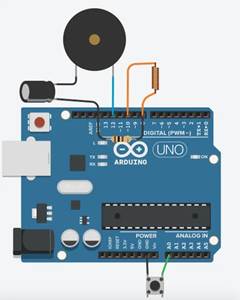
Figure 2: Base Wiring Diagram for rgco’s Minimal Arduino Metal Detector

Figure 3: Tinkercad Wiring Diagram for Proposed Drink Container Sorting System

Figure 4: Circuit Schematic for Proposed Drink Container Sorting System
The Arduino was programmed using the Arduino IDE to continuously measure the oscillation frequency of the LC circuit using its internal timer and compare it against a calibrated baseline. If the difference between the measured and baseline frequency exceeded a threshold of 500 Hz, indicating the presence of metal, the servo was actuated to 0° to divert the container. If no metal was detected, the ultrasonic sensor was polled: if an object was within 10 cm, the servo rotated to 180° to sort the container into the non-metal stream. If neither condition was met, the servo returned to its neutral position of 90°.
Mechanical Assembly
Additional materials for the mechanical assembly included popsicle sticks, a bamboo skewer, a cardboard baseplate, and with hot glue and Gorilla Double-Sided Mounting Tape as adhesive. The servo motor’s range of motion was extended using lever arms constructed from popsicle sticks (Figure 5). The coil was mounted below a cardboard baseplate, with a bamboo skewer attached to the middle of the plate to act as an axle for rotation (Figure 6). The extended arms attached to the base plate transferred the servo tilt to the platform, tilting to one side when a metal would be detected, and the other when a non-metal would be detected, sorting containers into their respective sections. The entire mechanism was attached to a trashcan, with the Arduino and breadboard secured to the side, the servo motor and platform inside, and the ultrasonic sensor just above (Figure 7).

Figure 5: Lever Arm Extension for SG90 Servo Motor Constructed from Popsicle Sticks
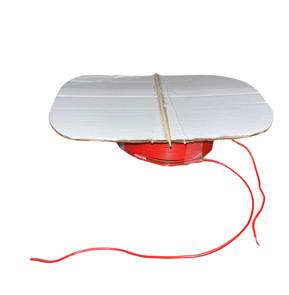
Figure 6: Coil Mounted Below Cardboard Baseplate with Bamboo Skewer Axle
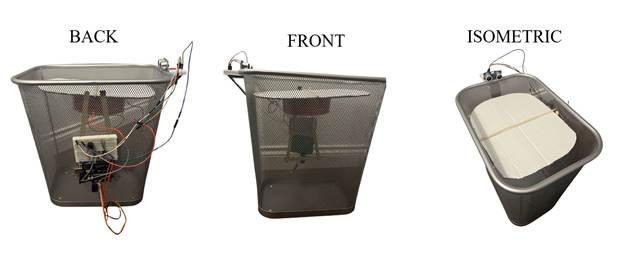
Figure 7: Full Assembly of Proposed Drink Sorting System from Multiple Angles
Results
During initial testing, the metal detector circuit performed as intended. When an aluminum can was placed within range of the coil [approximately ~5cm] on a flat non-metallic surface, the circuit successfully detected the change in LC oscillation frequency and triggered the servomotor, confirming that the electromagnetic induction-based detection was functioning correctly. The servo motor and ultrasonic sensor also responded as programmed when tested independently, with the servo actuating to the correct angles in response to both metal detection and object proximity inputs, however no formal data was collected during initial testing.
However, upon full system assembly and integration into the trashcan enclosure, the system did not perform as intended. Any initial movement of the servo resetting or disturbance of the coil as a result of an object of the platform caused the servo to actuate toward the metal detection position, and the system failed to reset to its neutral 90° position as programmed. Additionally, the SG90 servo motor appeared to lack sufficient torque to fully tilt the platform, with the servo occasionally sending repeated pulses in an attempt to reach the target angle. As a result, the sorting platform either remained tilted or failed to reach its intended position, and the system was unable to complete a full sorting cycle. This prevented controlled sorting trials and associated quantitative data from being collected.
Discussion
The false triggering of the system upon integration with the trashcan can likely be attributed to the wire-mesh material of the trashcan itself. When the coil was stationary inside the enclosure, the mesh had a constant effect on the inductance, keeping absdiff, the absolute difference between the current circuit timing value and the running baseline established at startup, relatively stable and potentially just below the 500Hz threshold. However, any slight movement of the coil changed its distance relative to the surrounding mesh, altering the inductance and producing a sudden shift in absdiff that pushed it above the threshold, triggering the servo toward the metal detection position despite no can being present. Although the baseline timing value of the circuit, which is established through measuring charge/discharge times of the capacitor, slowly self-adjusts at approximately 1 unit per 160ms, this rate was far too slow to compensate for the sudden shift caused by the mesh, keeping the system in a false positive state. Furthermore, even if the baseline did eventually catch up and reset the servo to neutral, the resulting movement of the coil, for example each time a drink container was placed on the platform, would change its distance to the mesh again, producing another inductance shift and repeating the false trigger. Increasing the detection threshold was not a viable solution, as the system requires a low enough sensitivity to detect the relatively weak signal produced by an aluminum can. To address these issues, two modifications are proposed for future iterations: replacing the wire mesh enclosure with a non-conductive alternative such as a plastic bin to eliminate material interference and, or rigidly mounting the coil to a fixed structure to prevent movement-induced inductance shifts entirely, addressing the root cause of the false triggering regardless of the enclosure material.
The torque limitations of the SG90 servo motor presented a challenge. During initial testing, the lever arm system functioned as intended, and the servo was able to successfully tilt the platform. During subsequent testing, particularly after modifications were made in the process of troubleshooting the false positives, the lever arm system began to not work as intended likely due to small changes in the lever arms position relative to the platform, the axle position of the platform, and the hinge connection between the servo and lever arm, which increased mechanical demand. The repeated pulsing observed when the servo attempted to reach its target angle is consistent with a servo stalling, where the motor continuously attempts to correct its position without successfully completing the tilt.
Together, these two issues prevented the system from completing a full sorting cycle during testing. However, both challenges can be addressed through targeted hardware modifications, suggesting that the core concept of a low-cost, automatic drink sorting system remains feasible. Future iterations should prioritize replacing the metal enclosure with a non-conductive bin, rigidly mounting the coil, and implementing a more carefully planned mechanical design to ensure consistency and reliability. Additionally, controlled sorting trials, comparing false positives, false negatives, and correct sorting, should be conducted to evaluate detection accuracy and overall system performance under real-world conditions.
Conclusion
Although the system did not perform as intended following full integration, the project still demonstrated that a low-cost, Arduino-based drink container sorting system is a realistic and plausible concept. The core detection components of the inductive coil, ultrasonic sensor, and servo motor function correctly in isolation, showing that the failures originated from integration challenges rather than flaws in the fundamental premise. Electromagnetic interference from the wire-mesh enclosure and insufficient servo torque as a result from the mechanical design were the primary obstacles, both of which are addressable through future interactions. Moving forward, replacing the enclosure with non-conductive material, stabilizing the inductive coil, and implementing a more carefully designed mechanical sorting mechanism would likely solve these issues and yield a far more reliable system. Such systems could provide a practical solution for reducing recycling contamination in small-scale environments such as schools, where simple automated sorting could support recycling programs.
References
Circular Online. (2025, February 5). AI at the bin: How Oscar Sort is transforming waste management. https://www.circularonline.co.uk/case-studies/ai-at-the-bin-how-oscar-sort-is-transforming-waste-management/
Eriksen, M. K., Pivnenko, K., Olsson, M. E., & Astrup, T. F. (2018). Contamination in plastic recycling: Influence of metals on the quality of reprocessed plastic. Waste Management, 79, 595–606. https://doi.org/10.1016/j.wasman.2018.08.007
Geyer, R., Jambeck, J. R., & Law, K. L. (2017). Production, use, and fate of all plastics ever made. Science Advances, 3(7). https://doi.org/10.1126/sciadv.1700782
Lumen Learning. (n.d.). Eddy currents and magnetic damping. Introductory Physics for the Health and Life Sciences II. https://openbooks.lib.msu.edu/collegephysics2/chapter/eddy-currents-and-magnetic-damping-2/
O’Leary, A. (2025, December 6). GovFacts. GovFacts. https://govfacts.org/housing-infrastructure/solid-waste-management/recycling-composting/where-your-recycling-goes-after-you-put-it-on-the-curb/
Recycling Contamination and Why It Matters. (n.d.). Recyclecoach.com. https://www.recyclecoach.com/blog/recycling-contamination-and-why-it-matters
rgco. (n.d.). Minimal Arduino metal detector. Instructables. https://www.instructables.com/Minimal-Arduino-Metal-Detector/
Robinson, C., & Huun, K. (2023, December 15). The Impact of Recycling on Climate Change. Environmental Center; University of Colorado Boulder. https://www.colorado.edu/ecenter/2023/12/15/impact-recycling-climate-change
Roche, K. (2019). AI-enhanced waste bins promote recycling at Vancouver airport. SustainableBiz Canada. https://sustainablebiz.ca/ai-enhanced-waste-bins-promote-recycling-at-vancouver-airport
Saddam[1] . (2018, January 6). Arduino Metal Detector Project with Code and Circuit Diagram. Circuitdigest.com. https://circuitdigest.com/microcontroller-projects/arduino-metal-detector-circuit-code
United States Environmental Protection Agency. (2025, May 14). Recycling Basics and Benefits. Www.epa.gov; EPA. https://www.epa.gov/recycle/recycling-basics-and-benefits
United States Environmental Protection Agency. (n.d.). Sources of greenhouse gas emissions. EPA. Retrieved March 6, 2026, from https://www.epa.gov/ghgemissions/sources-greenhouse-gas-emissions
What is contamination? – Recycle BC. (2017, November 30). https://recyclebc.ca/what-is-contamination/
Wong-Abdul, E., Chiu, R., & Caguiat, I. (2024). Waste Audit Report. https://www.ams.ubc.ca/wp-content/uploads/2024/04/Waste-Audit-Final-Report-2024-1.pdf
Yamazaki, S., Nakane, H., & Tanaka, A. (2002). Basic analysis of a metal detector. IEEE Transactions on Instrumentation and Measurement, 51(4), 810–814. https://doi.org/10.1109/TIM.2002.803397
YVR. (2019, April 29). YVR pilots first of its kind smart waste bins. https://news.yvr.ca/yvr-pilots-first-of-its-kind-smart-waste-bins/