Herdane Delariarte — Year 2, Life Science
Abstract
The Philippines is a highly flood-prone country with rapid growth in industrialism. This results in copious amounts of liquid waste to be filtered through methods such as coagulation and flocculation, often with chemicals that pose long-term health risks. The purpose of this experiment was to investigate if the active groups in the peel of the calamansi fruit, a staple Filipino waste product, could be repurposed into a plant-based biocoagulant and bioflocculant. Calamansi peels were extracted and mixed with synthetic turbid water made with kaolin powder at different concentrations. Then, after settling, a sample of the supernatants were tested with a spectrophotometer. Results showed that with the given restrictions, light absorbance increased as extract concentration increased. These findings suggest that calamansi peel extract is a promising coagulant-flocculation alternative, yet require more mixing, higher concentration of extract, or more time to settle, as flocs were in the process of forming, causing increased light scattering.
Introduction
The Philippines is a densely populated country with an ever-rising demand for industrialism. As a result, the mass development of pharmaceutical, agricultural, textile, and mining products reached an all-time high in 2021, with a growth factor of 531.44% (CEIC, 2025). These industries are the most significant sources of liquid waste (effluents) carrying various pollutants, ranging from organic compounds, suspended solids, oils and grease (Ighalo et al., 2020). These industries cause an influx of wastewater, which is directly unusable due to its colour and high pH level (Ravele et al., 2025). Moreover, the country is one of the most disaster-prone countries in the world, easily susceptible to floods due to its geographic location in the Pacific Typhoon Belt. With floods taking up to days and weeks to recede, bioaccumulation and biomagnification of pollutants including endocrine disruptors, pharmaceuticals, disinfectant by-products, personal care products, and microplastics entangle within the food chain, presenting considerable threats to human health and ecosystems. (Juliano and Magrini, 2017).
To combat this, coagulation-flocculation is a common type of water treatment process utilized due to its simplicity, low energy demand, effectiveness, and cost efficiency (Balbinoti et al., 2023). This method harnesses the charges on pollutants such as clay, organic matter, or bacteria, as they have functional groups on their surfaces such as hydroxyl and carboxyl (Choy et al., 2015). Once added to water, these groups lose a proton, causing a negative charge, consequently becoming colloids: microscopic particles scattered throughout the substance, causing the liquid to appear seemingly homogenous. The filtering process begins with coagulation, in which coagulation agents minimize the negative charge surrounding the suspended colloids. This prompts the colloids to bunch together into clumps known as “microflocs.” Flocculation seconds this process by inducing the particles to group into large clumps, or flocs, which can easily be removed through sedimentation filtration, a process in which the clumps are caught through filters of sand or gravel, removing organic and inorganic waste, and pathogenic microorganisms (Mallevialle, 1984; Ro’in, 2024).
Conventional coagulation-flocculation agents include chemical-based coagulants such as aluminum sulfate, ferric chloride, and calcium carbonate; or synthetic organic polymers such as polyaluminum chloride polyethyleneimine, which mainly remove turbidity, natural organic matter, and colour. Large doses of these inorganic coagulants are typically required for optimal flocculation, leading to the production of great amounts of metal hydroxide sludge and further disposal issues (Ravele et al., 2025). Consequently, studies report that aluminum sulfate and polyaluminum chloride in coagulation lead to Alzheimer’s disease caused by remaining residue (sludge), causing abnormal tissue or brain lesions. Synthetic polymers also have strong carcinogenic effects and are highly neurotoxic (Kurniawan et al., 2020).
Therefore, due to its non-toxic nature, biodegradable properties, and broad availability, the study of plants as biocoagulants and bioflocculants has risen. A data review from Ravele et al. (2025) shows a mass increase in demand for studies about natural coagulants between 2000 and 2025, especially in the last decade. A notable benchmark for this is derived from chitin: chitosan starch. Found in the exoskeletons of shellfish and fungi cell walls, it is the second most abundant polymer in the world, having well-documented performance and widespread application in removing aqueous pollutants. Prior to its review, chitosan has been used in many fields, including biotechnology, biomedicine, food processing, and wastewater treatment. Due to its long chain structure and free amino acids along its polymer chain backbone, studies show that chitosan serves good flocculation performance, including efficient charge neutralization and bridging effects, in the treatment of various contaminants in water (Yang et al., 2016).
Drawing from the progress found with chitosan, research has been done on plant-based coagulants. Less voluminous and capable of producing non-toxic sludge, plant-based coagulants are organic, hydrophilic compounds originating from various plant parts such as leaves, seeds, stems or husks from moringa oleifera or citrus fruits such as Citrus aurantiifolia (key lime). Not only are they readily accessible, but they are not detrimental to the environment, and have been proven to be effective against agricultural wastewater, heavy metals and tannery, and oils as per a review by Ravele et al. (2025). The coagulation activity primarily stems from the bioactive compounds found within the plant’s functional groups: hydroxyl, carboxyl, and amine moieties, which aid with charge neutralization and polymer bridging. In key lime fruit peels, as shown through the study performed by Dollah et al. (2019) which tested against turbidity, the primary constituents of organic acids and pectin are bioactive compounds that improve coagulating efficiency. Lowering the pH of the given solution, organic acids affect the ionization of the surface charges on particles. This helps remove repulsive forces on the colloidal particles, further promoting coagulation. Pectin is a long polysaccharide with various functional groups including carboxyl and hydroxyl, which bind to the charged particles and pollutants in the water. By absorbing onto the particles and neutralizing the surface of the suspended surfaces, the particles can more easily clump together. In addition, these long chains absorb more than one particle at a time, aiding the bridging process that pulls particles together into larger flocs. Simultaneously, pectin guides another type of coagulation known as sweep coagulation: as smaller particles get stuck in the polymer networks of pectin activated by introduction to water, they become larger particles that can settle to the bottom and can later be filtered. Organic acids support the extraction of pectin, and preserve these functional groups for these interactions. In comparison to conventional flocculants, natural flocculants carry diverse functional groups and multiple active sites, offering an enhanced removal of pollutants from wastewater. Nevertheless, the widespread usage of plant-based coagulants is difficult,due to variability in composition and extraction efficiency, thus having little research.
Implementation of fruit peels as natural coagulants in particular can greatly contribute to reducing the amount of waste discarded in landfills. For example, the Citrus x microcarpa,calamansi fruit, is a small citrus fruit native to the Philippines. In addition to being a staple in many Filipino dishes, it is used as a traditional remedy in medicine and cosmetics. Only the juice is used for these purposes, leaving up to 88,2000 to 94,000 tons of peels waste per year, making up one of the major waste products in Philippine landfills (Caguay, 2023). Using the information derived from other fruit peels, calamansi could possibly serve as one of the Philippine’s future natural coagulants, giving purpose to the thousands of peel scraps wasted annually. By investing in the studies of plant-based coagulants, this pathway reduces the risk of health complications in humans and surrounding ecosystems and can possibly help prevent further pollution and flooding, boosting the ever-changing country as it modernizes and evolves.
This study aims to explore a more environmentally sound method of water filtration in regards to the growing industrialism and constant flooding in the Philippines. By repurposing calamansi peels, a common waste product, the evolving nature of such industries can grow in a more sustainable sense, and potentially show greater favour to the studies of plant-based biocoagulants and bioflocculants.
Materials and Methods
Extract Collection
40 calamansi fruits were sourced from a local Filipino market, rinsed with water, then cut in half with a knife. To create the coagulant, juice was extracted from each half of the fruit by hand with a citrus squeezer until the peel stopped dripping. Peels were left outside to sun-dry for about 3 days, and were kept inside at night to avoid additional moisture absorption. The peels were then oven-baked for about 2.5 hours at 105°C until hardened, to allow for easier grinding. A mortar and pestle were used to grind calamansi peels into a fine powder, with some insufficiently dried peels, discarded as they were unable to be ground. The ground peels were sieved three times to achieve uniform particle size. The powder was then mixed with 500mL distilled water at a ratio of 1g: 30mL using a stir plate for 20 minutes to ensure thorough distribution. The solution was left aside to rest for 30 minutes to allow remaining solids to settle, then filtered with a coffee filter to remove residue in the solution and maintain its active components. The remaining liquid from the filtration process was then pipetted and used as the natural calamansi coagulant.
Preparation of Synthetic Turbid Water
To control the turbidity of the water, synthetic turbid water was prepared using kaolin powder and distilled water. Synthetic water was prepared by dissolving kaolin powder in 500mL of distilled water at a time, at a ratio of 2.8g/7L. The solution was mixed with a stir plate for 30 minutes to allow for a consistent mixture.
Jar Test Experiment
Testing the natural coagulant was performed with a jar test using glass beakers, consisting of 3 trials: 1 control (no coagulant), 1 with 10 g/mL and 1 with 25g/mL coagulant, each set up with 500mL of distilled water. Beakers were mixed with a stir plate for 20 minutes and were then left to settle for 10 minutes. A sample of the supernatant was extracted using a pipette to measure water turbidity.
A spectrophotometer was used to measure light absorbance in the three trials to determine the turbidity levels. After being left to sit, supernatants from the three trials were pipetted, and placed into a cuvette and into the spectrophotometer at 100x dilution. Supernatants were tested at 735nm red light. Results were collected and synthesized into a graph using Google Sheets. The trend of light absorbance was compared to see the effectiveness of the calamansi extract as a coagulant.
Results
To observe the effectivity of calamansi extract as a biocoagulant and bioflocculant, concentrations of 0mg/L, 10mg/L and 25mg/L of calamansi extract were mixed with 500mL of kaolin clay powder and left to sit to allow time for the clay particles to aggregate. Measuring the supernatant of the three respective trials in a spectrophotometer, the amount of light absorbed was measured with a spectrophotometer with 735nm red light, seeing an increase of light absorbance as extract concentration increased (Figure 2).
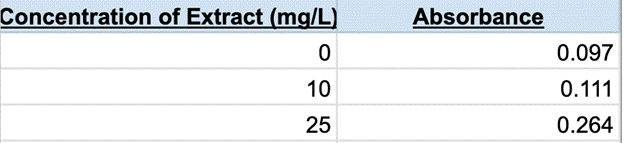
Figure 1: Raw data of light absorbance as concentration of calamansi extract increases.
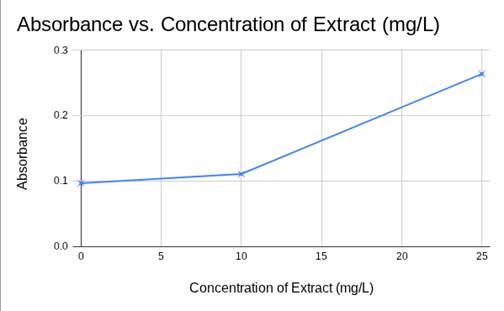
Figure 2: Visual comparison of the light absorbance of 735nm red light to the supernatants of 0mg/L, 10mg/L, and 25mg/L calamansi extract and kaolin clay powder.
Discussion
If the calamansi extract was an effective coagulant, the light absorbance would demonstrate a negative slope compared to the trial lacking extract, as the kaolin powder would have aggregated and sunk to the bottom, not being found in the supernatant. However, the graph follows a positive non-linear trend, seeing a sharp increase between the trial with 10mg/L and 25mg/L of calamansi extract. This opposes the Beer-Lambert law, A = εcl, in which absorbance (A) of light through a substance is directly proportional to the concentration (c) and the path length of light (l), in which the resulting graph should show a linear trend. Therefore, it is possible that the kaolin clay particles were in the process of coagulating, as the organic acids and pectin in the calamansi extract lessened its negative charges. With the given time, the extract-treated clay particles aggregated into larger flocs, which scatter more light in comparison to the original, untreated clay particles. As more light is scattered in various directions, less light is received by the spectrophotometer, thus accounting it as light absorbed by the substance (Poli et al. 2008). This supports the results of the experiment conducted by Dollah et al. (2019).
This study shows promising data for future studies, as time constraints and equipment limited the extent of this experiment. For instance, more time can be allotted to allow flocs to settle or concentrations of calamansi extract can be increased. In addition, a centrifuge can be used to increase the force being applied onto the flocs, as the force of gravity and the provided time in this experiment may have been insufficient to see a significant decrease in light absorbance.
This study opens opportunities to studies on other Filipino native fruits. For example, the peels of the Mangifera indica L (Philippine mango) and Citrus aurantium (dalandan), are both reported to contain significant amounts of pectin (Wongkaew et al. 2021; Maksoud et al. 2021) which can be extracted to show similar results. As further studies are directed toward the finding cheap and effective methods of extracting such compounds from common food waste products and converting them into biocoagulants and bioflocculants, countries such as the Philippines can effectively move forward into cheap, sustainable filtration methods that are safer for the environment, during a time of rapid industrial growth.
References
Balbinoti, J. R., Santos, R. E. D., Junior, De Sousa, L. B. F., De Jesus Bassetti, F., Balbinoti, T. C. V., De Matos Jorge, L. M., & Jorge, R. M. M. (2023). Plant-based coagulants for food industry wastewater treatment. Journal of Water Process Engineering, 52, 103525. https://doi.org/10.1016/j.jwpe.2023.103525
Caguay, M. (2023). Enhancing value and efficiency in calamansi and banana processing: A study on waste utilization and chopping machine development. American Journal of Multidisciplinary Research and Innovation, 2(4), 48–57. https://doi.org/10.54536/ajmri.v2i4.1862
CEICdata.com. (2018, June 1). Philippines Industrial Production Index growth. https://www.ceicdata.com/en/indicator/philippines/industrial-production-index-growth
Choy, S. Y., Prasad, K. M. N., Wu, T. Y., & Ramanan, R. N. (2013). A review on common vegetables and legumes as promising plant-based natural coagulants in water clarification. International Journal of Environmental Science and Technology, 12(1), 367–390. https://doi.org/10.1007/s13762-013-0446-2
Dollah, Z., Abdullah, A. R. C., Hashim, N. M., Albar, A., Badrealam, S., & Zaki, Z. Z. M. (2019). Citrus fruit peel waste as a source of natural coagulant for water turbidity removal. Journal of Physics Conference Series, 1349(1), 012011. https://doi.org/10.1088/1742-6596/1349/1/012011
Ighalo, J. O., Adeniyi, A. G., Eletta, O. a. A., Ojetimi, N. I., & Ajala, O. J. (2020). Evaluation of Luffa cylindrica fibres in a biomass packed bed for the treatment of fish pond effluent before environmental release. Sustainable Water Resources Management, 6(6). https://doi.org/10.1007/s40899-020-00485-6
Kurniawan, S., Ahmad, A., Imron, M., Abdullah, S. R. S., Hasan, H. A., Othman, A. R., & Kuncoro, E. P. (2022). Performance of Chemical-Based vs Bio-BasedCoagulants in Treating Aquaculture Wastewaterand Cost-benefit Analysis. Polish Journal of Environmental Studies, 32(2), 1177–1187. https://doi.org/10.15244/pjoes/156419
Juliano, C., & Magrini, G. (2017). Cosmetic ingredients as emerging pollutants of environmental and health concern. A Mini-Review. Cosmetics, 4(2), 11. https://doi.org/10.3390/cosmetics4020011
Maksoud, S., Abdel-Massih, R. M., Rajha, H. N., Louka, N., Chemat, F., Barba, F. J., & Debs, E. (2021). Citrus aurantium L. Active Constituents, Biological Effects and Extraction Methods. An Updated Review. Molecules, 26(19), 5832. https://doi.org/10.3390/molecules26195832
Mallevialle, J., Bruchet, A., & Fiessinger, F. (1984). How safe are organic polymers in water treatment? American Water Works Association, 76(6), 87–93. https://doi.org/10.1002/j.1551-8833.1984.tb05354.x
Poli, A. L., Batista, T., Schmitt, C. C., Gessner, F., & Neumann, M. G. (2008). Effect of sonication on the particle size of montmorillonite clays. Journal of Colloid and Interface Science, 325(2), 386–390. https://doi.org/10.1016/j.jcis.2008.06.016
Ravele, M. P., Olatunde, O. C., Oyewo, O. A., Makgato, S. S., & Onwudiwe, D. C. (2025). Plant-based coagulants for wastewater treatment: Recent advances and applications. Cleaner Water, 4, 100147. https://doi.org/10.1016/j.clwat.2025.100147
Ro’in, N. F. (2025). Coagulation-Floculation process in water remediation. Environmental and Toxicology Management, 4(1), 1–8. https://doi.org/10.33086/etm.v4i1.6693
Wongkaew, M., Chaimongkol, P., Leksawasdi, N., Jantanasakulwong, K., Rachtanapun, P., Seesuriyachan, P., Phimolsiripol, Y., Chaiyaso, T., Ruksiriwanich, W., Jantrawut, P., & Sommano, S. R. (2021). Mango peel pectin: Recovery, Functionality and Sustainable Uses. Polymers, 13(22), 3898. https://doi.org/10.3390/polym13223898
Yang, R., Li, H., Huang, M., Yang, H., & Li, A. (2016). A review on chitosan-based flocculants and their applications in water treatment. Water Research, 95, 59–89. https://doi.org/10.1016/j.watres.2016.02.068