Chloe Chen — Year 2, Life Science
Abstract
This study tested the antibacterial effects of berberine, a compound found in plants such as Berberis vulgaris and Hydrastis canadensis, against the Escherichia coli (E. coli) K-12 strain using disk diffusion. Two procedures were used with different solvents and concentration methods to measure zones of inhibition. Procedure 1 produced inconclusive results due to issues with solubility and procedure, while Procedure 2 showed small zones of inhibition that increased slightly with higher berberine concentrations. Overall, berberine showed some antibacterial activity against E. coli, but results were inconsistent due to experimental limitations. Further testing is still needed to confirm its effectiveness.
Introduction
Berberine, a compound found in a variety of plant species such as the Berberis vulgaris (European barberry) and Hydrastis canadensis (Goldenseal), has been widely used as a supplement to counteract high cholesterol and high blood pressure. (Mandal et al., 2020). Recently, Berberine has emerged as an effective antimicrobial treatment against fungi, bacteria, and viruses. Its promise is derived from its highly aromatic, nearly planar quaternary structure and ability to intercalate with DNA and inhibit protein biosynthesis (M. Cernakova & D. Kostalova, 2008). This paper aims to explore the effectiveness of Berberine as a supplement, specifically for combating specific bacterial species such as Escherichia coli (E.coli).
Berberine has been observed as an effective herbal metabolite on diseases such as Type 2 Diabetes, as well as cardiovascular complications. It does this by stimulating glycolysis through increasing the activity of glucokinases and by activating the 5′-adenosine monophosphate kinase (AMPK), a protein that improves glucose secretion (A. Och et al, 2022). Berberine has also been shown to enhance glucose-stimulated insulin secretion by elevating levels of glucagon-like peptide-1 (GLP-1), which promotes insulin release.
Furthermore, a study by Cernakova & Kostalova (2008) examined the effects of berberine against 17 microorganisms, including two Gram-negative bacteria, which have a thin layer of peptidoglycan—a structural polymer in bacterial cell walls—between their membranes, and two Gram-positive bacteria, which are identified by a thick peptidoglycan layer. Berberine’s atoms are arranged in thin, ring-like structures that are positively charged, helping it to facilitate reaction with the negatively charged DNA phosphate backbone. Being able to slip into the DNA allows for it to block the bacteria from copying its genetic code as well as its ability to create protein, reducing its reproduction rate. In addition, there has been potential activity that the usage of berberine is effective against Alzheimer’s, Staphylococcus aureus, fungal infections, yeast, and parasites. (Ji, H.-F., & Shen, L. 2011). Bandyopadhyay et al. (2013) details this in their study on how berberine exhibits antibacterial activity against enterovirulent Escherichia coli within yaks. This was done by inserting discs into the yaks containing the controls and the disease after administering the supplement. Results displayed that berberine serves as an effective antibacterial against multidrug-resistant E. coli. Overall, there has been promising research conducted on the effectiveness of Berberine in combating a variety of diseases and bacterial infections through its ability to break down proteins and inhibit bacterial reproduction in living organisms. This study aims to determine the strength of Berberine’s antibacterial properties by observing different concentrations in bacteria against the E-coli strain.
Materials and Methods
Note: two different procedures were utilized in this study. Procedure 1 was used for trials 1 and 2 and procedure 2 was used for trial 3.
Procedure 1:
An E. coli suspension was first prepared by adding 750µL of 0.9% NaCl into a microcentrifuge tube. Afterwards, 3 colonies of E. coli were taken from a previously prepared dish and mixed into the 750µL of NaCl. Afterwards, the prepared suspensions were spread plated onto 5 different plates through the L-spreader method. This was done by pipetting 100µL of suspension onto a 100mm agar plate, and then taking an L-spreader and coating the suspension evenly across the plate. This was repeated 4 times to encapsulate each percentage of Berberine concentration.
Solution Preparation
A Berberine Stock Solution was then created, where 521mg of pure, powdered Berberine Chloride was diluted into 50ml of TBE buffer to create a stock solution. Since the berberine was 96% pure, it’s true powder mass from 521mg was calculated to become 500mg. (500/0.96= 521mg). The stock solution was then heated up for 30 minutes on a hotplate to allow the Berberine to fully dissolve into the solvent. The original stock solution had a concentration of 10mg/ml of TBE. The rest of the dilutions were as follows: 100%, which was 10ml of stock, 75%, which was a ratio of 7.5ml of stock to 2.5 ml of solvent, 50%, which was a ratio of 5ml stock to 5ml solvent, 25%, which had a ratio of 1.0ml stock to 9.0ml solvent, and 0% which contained 10ml of solvent and would act as a control.
Disk Diffusion
The Berberine was then placed onto the agar plates filled with bacteria through the Kirby-Bauer method, where a pair of sterilized tweezers was used to take a sterile paper disk and fully submerge it into one of the five solutions. The disk was then placed onto the center of the bacteria plate. This process was repeated 4 additional times for each concentration of Berberine. The bacteria was then left to incubate for 24 hours, and then were promptly removed and measured for zones of inhibition.
Table 1: Results from Procedure 1, Concentration vs. Trial
| Trial | % of Stock | Final Volume | Stock Volume | Solvent Volume | Final Concentration |
| 100% | 1.00 | 10 mL | 10 mL | 0mL | 10mg/mL |
| 75% | 0.75 | 10 mL | 5 mL | 2.5 mL | 7.5 mg/mL |
| 50% | 0.50 | 10 mL | 5 mL | 5 mL | 5 mg/mL |
| 25% | 0.25 | 10 mL | 2.5 mL | 7.5 mL | 2.5 mg/mL |
| 10% | 0.10 | 10 mL | 1 mL | 9 mL | 1 mg/mL |
| 0% | 0 | 10 mL | 0 mL | 10 mL | 0 |
Procedure 2:
A Berberine solution was first prepared, where 40ml of Ethanol and 100mg of Berberine were added into a beaker to create a 2.5mg/ml solution. The beaker was then inserted into a gentle steamer at around 58-60 degrees for 10 minutes, and removed periodically to stir to allow the Berberine to fully dissociate into the ethanol solution. After a majority of the particles were dissolved, the solution was taken out of the steamer and then continuously stirred for an additional minute.
Bacteria Preparation
Bacteria was prepared where 750µL of 0.9% NaCl was pipetted into a microcentrifuge tube to create a bacterial suspension. 3 Colonies of E-coli bacteria were then taken from a previously prepared dish and mixed into the suspension of NaCl. Then, 6 plates of bacteria were spread plated onto agar plates by pipetting 100µL of suspension onto a 100mm plate and then evenly coated around the area utilizing an L-spreader.
Disk Diffusion
The prepared Berberine was then placed onto the agar plates utilizing the Kirby-Bauer method. Filter paper disks were placed into a weigh boat through a sterilized pair of tweezers, and then 100µL of solution was then pipetted onto the first disk. The weigh boat was then left to sit for 5 minutes to allow the ethanol to evaporate so the ethanol would not confound the results of the data attempting to be recorded. Afterwards, the disk was placed onto the bacterial plate. This procedure was repeated 4 times, with each subsequent trial adding an additional 100µL of solution to create 5 separate concentrations of Berberine. The last trial was a control, where no solution was pipetted onto the disk. The bacteria was then left to incubate and develop for 24 hours, and then were promptly removed and measured for zones of inhibition.
Results
Table 2: Results from Procedure 2, Concentration vs. Trial
| 0% | 10% | 25% | 50% | 75% | 100% | |
| Trial 1 | 0.2 cm | 0.7 cm | 0.4 cm | 0.9 cm | 0.6 cm | 0.3 cm |
| Trial 2 | 0.1 cm | 0.5 cm | 0.1 cm | 0.5 cm | 0.6 cm | 0.4 cm |
| Mean | 0. 15 cm | 0.6 cm | 0.25 cm | 0.7 cm | 0.6 cm | 0.35 cm |
Table 3: Results from Procedure 2, Concentration vs. Trial
| 100 | 200 | 300 | 400 | 500 | Negative Control (No solution) | Positive Control (Ethanol Only) | |
| Trial 1 | 0.8 cm | 0.9 cm | 0.8 cm | 1.2 cm | 0.7 cm | 0.2 cm | 2.0 cm |
| Trial 2 | 0.9 cm | 1.0 cm | 1.1 cm | 1.1 cm | 1.4 cm | 0.1 cm | 2.5 cm |
| Mean | 0.85 cm | 0.95 cm | 0.95 cm | 1.15 cm | 1.05 cm | 0.15 cm | 2.25 cm |
Results
The purpose of this experiment was to test how effective different concentrations of berberine were at resisting Escherichia coli growth. This was done by applying different amounts of berberine to bacterial samples and measuring the zones of inhibition produced in two procedures. As seen in Figure 1, Procedure 1 showed inconclusive results, as there were very minimal zones of inhibition present throughout each sample set. Figure one shows how the zones of inhibition did not show any positive or negative linear trends between bacterial growth and Berberine concentration. There was no major difference between the lower and higher concentrations in Procedure 1, which made the results difficult to interpret. This suggests that within Procedure 1, Berberine did not demonstrate a strong antibacterial effect. Furthermore, each trial had varied sizes, with 0% having a mean of 0.15cm which had minimal differences than the diameter that the 100% trial yielded (0.35 cm).
As seen in Figure 2, there was a larger yield in zones of inhibition in comparison to Procedure 1, but were still very minimal. The increase in the diameter of the zones of inhibition shows how bacterial growth decreased against the Berberine concentration increasing. Although small, the linear patterns within Figure 2 may suggest that there may be a positive correlation between the zones of inhibition and the amount of Berberine Ethanol solution added. In comparison, the results were consistent across each of the trials and showed an upward trend and linear relationship between inhibition diameter and amount of Berberine concentration present.
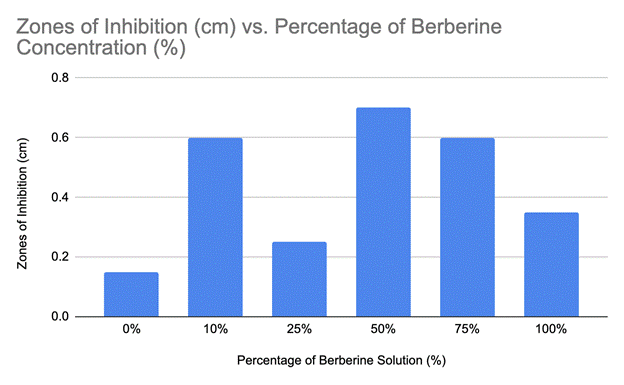
Figure 1: Bar Graph of Data Results from Trial 1
Figure 2: Bar Graph of Data Results from Trial 2
Discussion
The inconclusive data found from following Procedure 1 was mostly due to the incorrect solvating of the Berberine into the original stock concentration. Some results slightly deviated from their expected values, including one of the diameters in trial 1 being nearly identical to another trial of a different concentration in trial 2. Limitations found throughout the experiment included the solubility of Berberine, which was often inconsistent as it required a heat in order for it to fully dissolve into the buffer solution. This led to Berberine precipitant appearing once the solution cooled to its room temperature, which may have led to the inconclusive results. The TBE Buffer was unable to fully dissolve the Berberine.
Additionally, the Berberine was heated in the initial solution without consideration of its safe temperature range, which put it at risk for thermal degradation. The thermal degradation could completely change the antimicrobial properties of the Berberine, reducing its overall effectiveness and contributing to inconclusive results. The overheating could have also altered the accuracy of each of the concentrations, as heating the berberine to an unknown temperature may have caused degradation or may have precipitated after cooling, which would alter the concentration of the active compound. Furthermore, TBE buffer is not designed to dissolve hydrophobic and poorly soluble compounds such as Berberine.
Procedure 2 yielded slightly more consistent results than Procedure 1, but still contained significant sources of error. Certain zones of inhibition measured throughout Procedure 2 suggest antimicrobial activity, however, inconsistency throughout the procedure prevents definitive conclusions. There is likely low reliability due to the amount of procedural inconsistencies, as well as questionable validity due to the involvement of ethanol and solubility issues faced with the Berberine. The lack of standardization in bacterial colony preparation, along with variability in plating using the L-spreader, may have affected the clarity of the zones of inhibition and led to inconsistent bacterial concentrations across plates.
If this experiment were to be conducted again, several modifications would be implemented to improve the reliability and validity. For example, the Berberine’s solubility continued to be an issue, and its cooling and reforming of particles as it was being plated onto the disks could have created an uneven concentration and inconsistent dosing across disks. Additionally, the ethanol evaporation was inconsistent and not properly controlled. The rate at which the ethanol evaporated depended on the room temperature and volume added, which meant that some disks likely contained residual ethanol. The ethanol itself is antimicrobial, which could be an additional confounding variable involved in this experiment.
Furthermore, the procedure deviated partially from the traditional Kirby-Bauer methodology, as the volume was changed instead of concentration for each disk. Larger volumes could have been oversaturated and would be unevenly diffused, or would be spilt beyond the disk and would not get fully absorbed into it. If this experiment were to be conducted again, instead of increasing volumes applied to each disk, standardized concentrations could be prepared through dilutions similar to Procedure 1. Additionally, the drying process could be streamlined to ensure the ethanol is completely evaporated.
In conclusion, results from this experiment suggest potential antibacterial effects of Berberine, however, due to procedural errors, results are inconclusive. Further controlled experimentation is required for the future. In other streams of research, specifically in its usage as an antibiotic, Berberine has shown to increase insulin secretion by increasing the levels of glucagon in the bloodstream. Berberine has proven to be useful as a supplement against the Escherichia coli species, as it can interfere with the filaments that allow E. coli to attach to other organisms to spread. This is useful to study as bacteria can adapt and become resistant, so it is important to research different treatments. For the future, more research should be done on the bioavailability and long-term safety of Berberine to ensure the safety of drug users worldwide.
Reference
Bandyopadhyay, S. (2013). https://www.sciencedirect.com/science/article/abs/pii/S1047847720300046?via=ihub. ScienceDirect. https://www.med.upenn.edu/pmi/events/https-www-sciencedirect-com-science-article-abs-pii-s1047847720300046-via-3dihub
Colorcon. (2025, October 15). Understanding bioavailability: Why it matters in drug development. Home. https://www.colorcon.com/education-insights/understanding-bioavailability-why-it-matters-in-drug-development
Čerňáková, M., & Košťálová, D. (2002). Antimicrobial activity of berberine—a constituent ofMahonia aquifolium. Folia Microbiologica, 47(4), 375–378. https://doi.org/10.1007/bf02818693
Ji, H.-F., & Shen, L. (2011). Berberine: A Potential Multipotent Natural Product to Combat Alzheimer’s Disease. Molecules, 16(8), 6732-6740. https://doi.org/10.3390/molecules16086732
Karaosmanoglu, K., Sayar, N. A., Kurnaz, I. A., & Akbulut, B. S. (2013a). Assessment of berberine as a multi-target antimicrobial: A multi-omics study for drug discovery and repositioning. OMICS a Journal of Integrative Biology, 18(1), 42–53. https://doi.org/10.1089/omi.2013.0100
Karaosmanoglu, K., Sayar, N. A., Kurnaz, I. A., & Akbulut, B. S. (2013b). Assessment of berberine as a multi-target antimicrobial: A multi-omics study for drug discovery and repositioning. OMICS a Journal of Integrative Biology, 18(1), 42–53. https://doi.org/10.1089/omi.2013.0100
Mandal, S. K., Maji, A. K., Mishra, S. K., Ishfaq, P. M., Devkota, H. P., Silva, A. S., & Das, N. (2020). Goldenseal (Hydrastis canadensis L.) and its active constituents: A critical review of their efficacy and toxicological issues. Pharmacological Research, 160, 105085. https://doi.org/10.1016/j.phrs.2020.105085
Mueller, M., & Tainter, C. R. (2023, July 13). Escherichia coli Infection. StatPearls – NCBI Bookshelf. https://www.ncbi.nlm.nih.gov/books/NBK564298/
Och, A., Och, M., Nowak, R., Podgórska, D., & Podgórski, R. (2022). Berberine, a herbal metabolite in the metabolic syndrome: the risk factors, course, and consequences of the disease. Molecules, 27(4), 1351. https://doi.org/10.3390/molecules27041351
Roy, A., & Anbarasu, A. (2025). Unveiling Berberine analogues as potential inhibitors of Escherichia coli FtsZ through machine learning molecular docking and molecular dynamics approach. Scientific Reports, 15(1), 14668. https://doi.org/10.1038/s41598-025-98835-x
Sun, T., Li, X., Hong, J., Liu, C., Zhang, X., Zheng, J., Xu, Y., Ou, Z., Zheng, J., & Yu, D. (2019). Inhibitory Effect of Two Traditional Chinese Medicine Monomers, Berberine and Matrine, on the Quorum Sensing System of Antimicrobial-Resistant Escherichia coli. Frontiers in Microbiology, 10, 2584. https://doi.org/10.3389/fmicb.2019.02584 Zhou, H., Wang, W., Cai, L., & Yang, T. (2023). Potentiation and mechanism of berberine as an antibiotic adjuvant against Multidrug-Resistant bacteria. Infection and Drug Resistance, Volume 16, 7313–7326. https://doi.org/10.2147/