Hedda Huang — Year 2, Life Science
Abstract
With the rise of antibiotic-resistant bacteria as a major global health concern, natural substances are increasingly being explored as alternative antibacterial agents. This experiment investigated the antibacterial effectiveness of honey, garlic extract, and tea tree oil against Escherichia coli K12 using the Kirby–Bauer disk diffusion method. Paper disks soaked in 1:3, 1:1, and undiluted solutions were placed onto agar plates inoculated with bacteria and incubated for 24 hours. Zones of inhibition were measured to assess antibacterial activity, and pH values were recorded to evaluate whether acidity may have contributed to bacterial inhibition. Tea tree oil demonstrated the strongest antibacterial effect across all concentrations, followed by honey, while garlic extract showed the weakest effect. The results suggest that pH alone does not account for antibacterial activity, and that active compounds, particularly in tea tree oil play a more significant role. These findings highlight the potential of natural agents as alternatives to conventional antibiotics.
Introduction
Overuse and misuse of synthetic antibiotics in medicine and agriculture have accelerated the evolution of antibiotic-resistant bacterial strains (Mayo Clinic, 2022), reducing the effectiveness of many conventional treatments. On a cellular level, bacteria evolve to survive drug exposure through genetic mutations, amplification and horizontal gene transfer (Mayo Clinic, 2022). This situation has increased interest in alternative antibacterial strategies, including natural agents derived from plants and other organic sources, as it is essential to create new antimicrobial approaches that focus on subtly influencing bacterial behavior. Natural antibacterial agents are not only more accessible and environmentally sustainable but may also reduce selective pressure for resistance development, making them a promising area of research.
Escherichia coli K12 (E. coli K12) is a non-pathogenic, Gram-negative bacterial strain that was isolated 100 years ago (Browning et al., 2023) and is widely used as a model organism in microbiological research. Its well-characterized genetics and predictable growth behavior allow researchers to safely investigate antibacterial agents while maintaining relevance to real-world bacterial control.
The present study focuses on the antibacterial effects of three natural agents, including garlic extract, honey, and tea tree oil, against E. coli K-12. Antibacterial activity is assessed through zone of inhibition; pH measurements were taken to see if there was any correlation, but the pH values alone did not indicate antibacterial activity. While previous research has examined the antibacterial properties of these agents individually, not many studies have compared them under controlled conditions, particularly across a pH gradient. Understanding how pH influences antibacterial activity is essential because the optimal pH for E. coli growth is 7.0 (Son & Taylor, 2021), and deviations from this level may enhance or reduce the effectiveness of natural agents. Measuring the pH of antibacterial agents provides insight into their potential mechanisms of action.
The zone of inhibition method is commonly used to evaluate antibacterial activity and is the method used in this experiment. In this method, a bacterial suspension is spread across an agar plate followed by the addition of a sterile paper disk saturated with antibacterial agents – in this case, garlic extract, honey, and tea tree oil – is placed in the middle of the agar plate. Calipers or a ruler are then used to measure the clear area around the disk where bacterial growth is inhibited. A larger zone indicates stronger antibacterial activity, while a smaller zone indicates weaker activity. This method allows for a direct comparison of the potency of different agents under standardized conditions.
Allium sativum (Garlic) has been used traditionally worldwide to treat various bacterial infections. Its antibacterial properties are primarily attributed to oil-soluble organosulfur compounds such as allicin, ajoenes, and allyl sulfides (Bhatwalkar et al., 2021). Allicin, produced when garlic cloves are crushed or chopped, inhibits bacterial growth by activating the enzyme alliinase (Landhe, et al., 2011). Alliinase acts as a catalyst during the synthesis of an active compound named allicin which acts as a natural antibacterial and anti-inflammatory agent. Several studies have demonstrated that garlic extract exhibits strong inhibitory effects against E. coli and other Gram-positive and Gram-negative bacteria (Landhe et al., 2011).
Honey has been used for centuries, particularly in wound care, due to its antibacterial properties. According to Almasaudi (2021), its high sugar concentration creates osmotic pressure that inhibits bacterial growth by drawing water out of bacterial cells, leading to dehydration and cell death. Additionally, honey contains bioactive compounds such as hydrogen peroxide, flavonoids, and phenolic acids that contribute to its antibacterial activity. Research has shown that honey is effective against a wide range of bacterial species. However, the antibacterial potency of honey varies depending on its source, sugar content, and pH. Typically, honey is slightly acidic (pH 3.2–4.5), which may further enhance its inhibitory effects on bacterial growth (Mandal, 2011).
Tea tree oil (Melaleuca alternifolia) is an essential oil widely recognized for its antimicrobial properties. Its primary active component, terpinen-4-ol is an excellent antibacterial agent according to Raman, et al. (1995). Tea tree oil has been demonstrated to inhibit both Gram-positive and Gram-negative bacteria, including E. coli (Cox, et al., 2001). Tea tree oil’s antibacterial activity can also be influenced by environmental factors such as pH. While studies have confirmed its strength, only a few have examined how pH variations impact its effectiveness, particularly in comparison with other natural agents like garlic extract or honey.
Materials & Methods
Preparation of Bacterial Suspension & Plating
A bacterial suspension of Escherichia coli K12 was prepared from a pre-grown countable agar plate containing approximately 25–250 colonies. A 0.9% saline solution was first prepared by dissolving 0.135 g of NaCl in 15 mL of distilled water. Using a sterile inoculation loop, 3 bacterial colonies were collected from the agar plate and suspended in 1.5 mL of the saline solution in a microcentrifuge tube. The isotonic saline solution was used to prevent the E. coli cells from bursting due to osmotic pressure. The suspension was then vortexed to evenly distribute the bacterial cells throughout the solution. Using a micropipette, 100 µL of the bacterial suspension was transferred onto the surface of an agar plate. An L-spreader was used to evenly distribute the bacteria across the agar surface by rotating the spreader back and forth while continuously turning the plate.
Preparation of Antibacterial Solutions & Disc Diffusion
To prepare the antibacterial solutions, sterile graduated cylinders were used for each substance and concentration. For the 1:3 dilution, 2mL of antibacterial agent (honey, garlic extract, and tea tree oil) was mixed with 6mL of distilled water. For the 1:1 dilution, 2mL of antibacterial agent was mixed with 2.0mL of distilled water. Undiluted samples of each substance were also measured in separate cylinders. Each solution was gently mixed before use to ensure even distribution. Sterile paper disks were submerged in each solution using sterilized tweezers and allowed to soak for approximately 10-15 seconds to absorb the antibacterial agent. Tweezers were sterilized between each use by dipping them into ethanol and briefly passing them through a flame to evaporate the alcohol and eliminate contaminants. Using the sterilized tweezers, one soaked paper disk was carefully placed at the centre of each agar plate previously inoculated with E. coli K12. Separate agar plates were used for each antibacterial agent and concentration to avoid cross-contamination. The disks were gently pressed onto the agar surface to ensure full contact before incubation.
Incubation and Measurement
Plates were inverted and incubated at 37°C for 24 hours, then stored in a refrigerator to prevent further bacterial growth. Zones of inhibition were measured in millimeters using a ruler.
Results
The antibacterial effects of honey, garlic extract, and tea tree oil were tested against E.coli K12 using agar plates and measuring zones of inhibition after incubation.
In Trial 1, a 1:3 dilution of each substance was tested. Incubation took place overnight and samples were moved to the fridge to prevent any further bacterial growth. Results were observed after two weeks. None of the substances (honey, garlic extract, or tea tree oil) demonstrated a visible zone of inhibition and bacterial growth was observed across the entire agar surface. There was no sufficient evidence to prove which antibacterial agents worked the best.
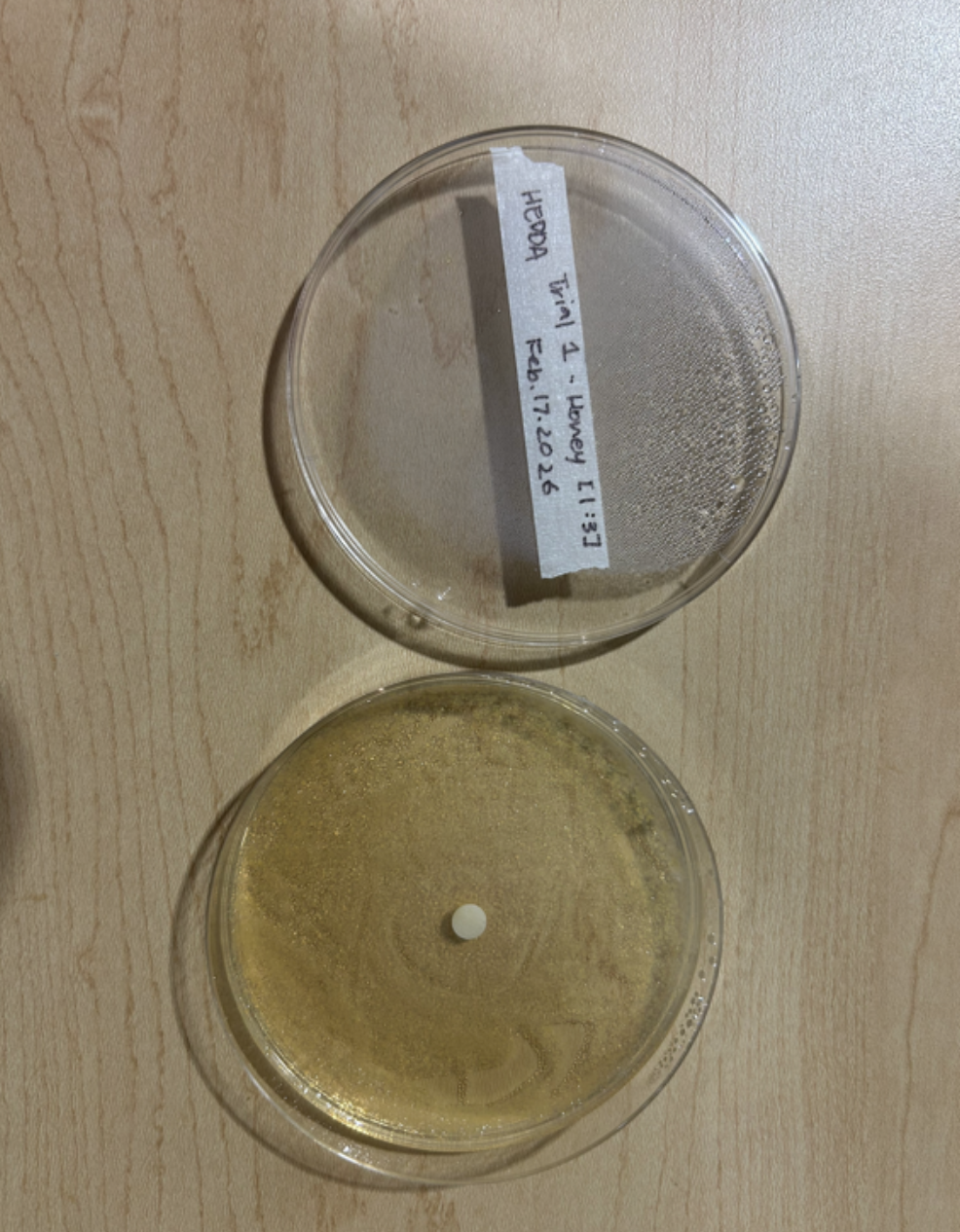
Figure 1: Agar plate of E.coli K12 with a 1:3 concentration of diluted honey after incubation period, showing continuous bacterial growth with no observable zone of inhibition surrounding the paper disk.
In Trial 2, a 1:1 concentration of each substance was tested and observed after one week. Tea tree oil produced a measurable zone of inhibition of approximately 1.6cm by 1.7cm as seen in Figure 2. Honey produced a smaller zone of inhibition measuring approximately 1.0cm by 1.2 cm. Garlic extract did not produce a visible zone of inhibition and bacterial growth was observed up to the edge of the paper disk. In this trial, tea tree oil prevented bacterial growth the most while garlic extract prevented none.
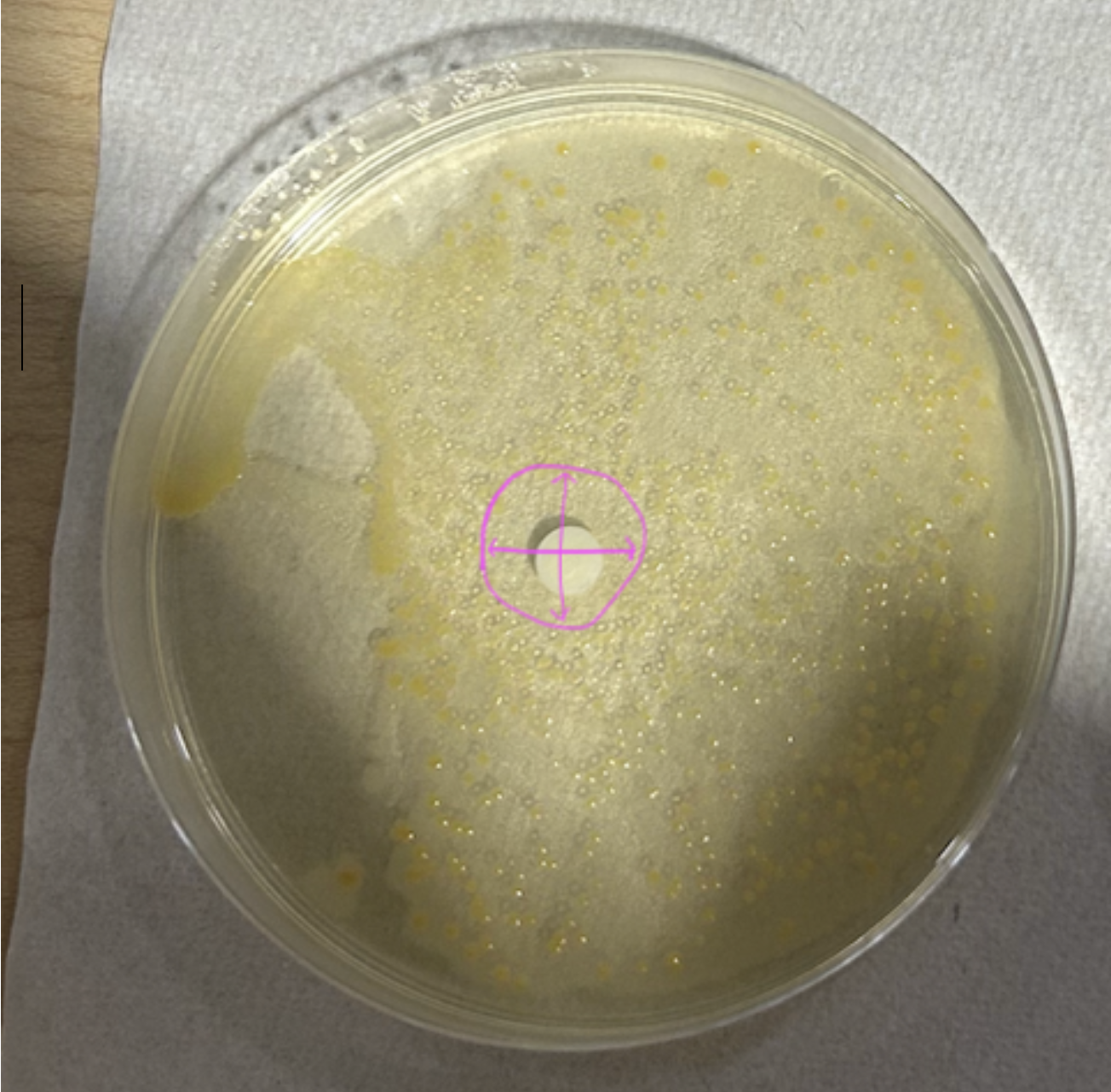
Figure 2: Agar plate with E.coli K12 with a 1:1 concentration of tea tree oil after incubation period, showing a clear zone of inhibition measuring approximately 1.6cm by 1.7cm.
In Trial 3, a 1:1 concentration was again tested for each substance to increase accuracy. Tea tree oil produced a zone of inhibition measuring approximately 1.8cm by 1.9cm. Honey produced a zone of inhibition measuring approximately 1.2cm by 1.3 cm. Garlic extract produced a small but visible zone of inhibition measuring approximately 0.6cm by 0.7cm. Same as Trial 2, tea tree oil has the most zone of inhibition while garlic extract has the least.
In Trial 4, undiluted substances were tested. Tea tree oil produced a clear zone of inhibition measuring approximately 2.2cm by 1.0cm as seen in Figure 3. Honey produced a zone of inhibition measuring approximately1.4cm by 1.5cm. Garlic extract produced a zone of inhibition measuring approximately 0.9cm by 1.0cm. Same as Trial 2 and 3, tea tree oil demonstrated the most antibacterial properties while garlic extract demonstrated the least.

Figure 3: Agar plate with E.coli k12 with pure tea tree extract (no dilution) after incubation period, showing a clear zone of inhibition of 2.2cm by 1cm.
As seen in Table 1, pH values of the different types of antibacterial agents were tested to discover whether pH contributes significantly to prohibiting bacterial growth.
Table 1: pH values of Honey, Garlic extract, and Tea tree oil at varying concentrations.
| 1:3 concentration | 1:1 concentration | undiluted | |
| Distilled water (control) | n/a | n/a | 4.9 |
| Tea tree oil | 4.72 | 4.55 | 4.38 |
| Honey | 4.85 | 4.73 | 3.98 |
| Garlic extract | 4.78 | 4.61 | 4.00 |
Table 2: Zones of Inhibition of Honey, Garlic extract, and Tea tree oil across different trials.
| Trial 1 | Trial 2 | Trial 3 | Trial 4 | |
| Distilled water (control) | 0 cm x 0 cm | 0 cm x 0 cm | 0 cm x 0 cm | 0 cm x 0 cm |
| Tea tree oil | 0 cm x 0 cm | 1.6 cm x 1.7 cm | 1.8 cm x 1.9 cm | 2.2 cm x 1.0 cm |
| Honey | 0 cm x 0 cm | 1.0 cm x 1.2 cm | 1.2 cm x 1.3 cm | 1.4 cm x 1.5 cm |
| Garlic extract | 0 cm x 0 cm | 0 cm x 0 cm | 0.6 cm x 0.7 cm | 0.9 cm x 1.0 cm |
Table 2 demonstrates the results of ones of inhibition measured by a ruler of the three different types of antibacterial agents across different trials at various concentrations. Tea tree oil demonstrated as the most effective while Garlic extract was observed to be the least effective throughout the trials.
Discussion
These results suggest that tea tree oil demonstrated the greatest antibacterial effect against Escherichia coli K12, producing the largest zones of inhibition across all concentrations, while honey showed moderate effects and garlic extract showed very minimal to no inhibition. When the concentration is increased, zone of inhibition increases as well, representing a proportional relationship between concentration and the effectiveness of these substances. Although all tested substances were acidic, the differences in pH values could not fully explain the variation in antibacterial effectiveness, as tea tree oil was more acidic than the other two substances in its pure form but was more basic in its diluted form, but resulted in the largest zone of inhibition nonetheless. This suggests that active antimicrobial compounds like terpinen-4-ol in tea tree oil play an even more significant role in bacterial inhibition.
There were several limitations in this experiment that may have impacted the accuracy of the results. One limitation was the lack of precision regarding how much volume is absorbed by each paper disk, which could have led to differences in the amount of antibacterial agent added. Since human error can occur in terms of the consistency of spreading E. coli K12 over the agar plate, it could have affected the uniformity of bacterial growth. Although the incubation period for all trials lasted for 24 hours, the time left in the fridge varied, which may have influenced the size of the zones of inhibition. Environmental factors such as the fluctuation in temperature in the incubator (ex: open and closing the door) could have affected the outcome as well. Another limitation of this experiment was the possibility of contamination on some agar plates. Based on the appearance of several colonies in the photos, additional bacterial growth besides E. coli K12 may have been present. This contamination could have occurred during plating or during the handling process of the paper disks. The presence of other bacteria could have influenced the size and clarity of the zones of inhibition, reducing the accuracy of the results.
Although there are many existing studies to discuss the effectiveness of these agents individually, limited studies have directly compared their effectiveness with one another. This gap highlights the importance of further investigating this topic, as understanding how different antibacterial mechanisms interact may inform the development of accessible, natural alternatives to synthetic antibiotics. Antibiotic resistance continues to challenge global health, making the exploration of natural antibacterial agents increasingly relevant. Garlic extract, honey, and tea tree oil offer promising alternatives. This knowledge can be used in future research and practical applications, from clinical use to better managing bacterial contamination.
However, several questions remain unanswered. For example, the specific compounds responsible for the antibacterial effects of each substance were not isolated in this experiment, meaning the exact mechanism of action was not investigated. Future research could involve using more precise measurement techniques and increasing the number of trials to improve reliability. Additionally, testing these substances against other types of bacteria, including both Gram-positive and Gram-negative ones would provide a more complete understanding of the antibacterial effect of honey, tea tree oil, and garlic extract. If more time and resources were available, further analysis such as isolating active compounds or comparing results with antibiotics could strengthen the result of this experiment.
Overall, this study shows that natural antibacterial agents vary significantly in their effectiveness against E. coli K12, with tea tree oil being the most effective, followed by honey, while garlic extract showed little to no inhibition. These findings support the potential of certain natural substances as antibacterial agents and provide a foundation for further research into safer, more accessible alternatives to conventional antibiotics.
References
Almasaudi, S. (2021). The antibacterial activities of honey. Saudi Journal of Biological Sciences, 28(4). https://doi.org/10.1016/j.sjbs.2020.10.017
Antimicrobials, C. on N. D. in the S. of A. T. N. C. of. (2006). Challenges for the Development of New Antimicrobials— Rethinking the Approaches. In http://www.ncbi.nlm.nih.gov. National Academies Press (US). https://www.ncbi.nlm.nih.gov/books/NBK19843/
Cox, S. D., Mann, C. M., Markham, J. L., Bell, H. C., Gustafson, J. E., Warmington, J. R., & Wyllie, S. G. (2001). The mode of antimicrobial action of the essential oil of Melaleuca alternifolia (tea tree oil). Journal of Applied Microbiology, 88(1), 170–175. https://doi.org/10.1046/j.1365-2672.2000.00943.x
Landhe, V. P., Gavasane , A. T., Nipate , S. S., Bandawane D.D., D. D., & Chaudhari , P. D. (2011). Role Of Garlic (Allium sativum) in Various Diseases: An Overview (pp. 1–6). https://www.researchgate.net/profile/Vikas-Londhe/publication/233379240_Role_of_garlic_Allium_sativum_in_various_diseases_An_overview/links/09e41509d3c3b34809000000/Role-of-garlic-Allium-sativum-in-various-diseases-An-overview.pdf
Mandal, M. D., & Mandal, S. (2011). Honey: Its medicinal property and antibacterial activity. Asian Pacific Journal of Tropical Biomedicine, 1(2), 154–160. https://doi.org/10.1016/s2221-1691(11)60016-6
Raman, A., Weir, U., & Bloomfield, S. F. (1995). Antimicrobial effects of tea-tree oil and its major components on Staphylococcus aureus, Staph. epidermidis and Propionibacterium acnes. Letters in Applied Microbiology, 21(4), 242–245. https://doi.org/10.1111/j.1472-765x.1995.tb01051.x
Singer Instruments. (2025). Zone of Inhibition explained –. Singer Instruments. https://www.singerinstruments.com/resource/zone-of-inhibition-explained/
Tattelman, E. (2005). Health Effects of Garlic. American Family Physician, 72(01), 103–106. https://www.aafp.org/pubs/afp/issues/2005/0701/p103.html
Urban-Chmiel, R., Marek, A., Stępień-Pyśniak, D., Wieczorek, K., Dec, M., Nowaczek, A., & Osek, J. (2022). Antibiotic Resistance in Bacteria—A Review. Antibiotics, 11(8), 1079. https://doi.org/10.3390/antibiotics11081079