Anna Kennedy — Year 2, Applied Science
Abstract
Standardized mist netting is an important tool and is the primary sampling method at many bird observatories and research stations around world. However, mist netting as a technique for estimating bird populations is criticized for susceptibility to outside variables biasing capture data (Mallory et al., 2004). This study aimed to determine whether the expected foraging height of bird species or the sex of the bird correlates with the height at which they get captured in mist nets. At Long Point Bird Observatory, Ontario, Canada, from August 15, 2025 to September 3, 2025, 248 birds from 12 species were mist netted and their species, sex, and panel in which they were captured were recorded. For all 12 species, a slight positive correlation was found between foraging height and capture height however it was not significant (p-value = 0.3). No significant difference in capture number between net panels was found for each sex or for six individual species except for Empidonax minimus (Least Flycatchers), where a significant difference was found between panels 5 and 1 (top and bottom). This study suggests minimal to no capture bias in ground level mist nets based on foraging height, sex, or species.
Introduction
Mist netting is a popular method to catch birds when bird banding (Holbech, 2020). During bird banding and mist netting efforts, trained personnel catch birds and apply a small metal band with a unique nine-digit number to their leg. This allows researchers to track and monitor population trends over time as well as conduct targeted studies.
Standardized mist netting is an important tool and is the primary sampling method at many bird observatories and research stations around world. As Remsen and Good (1996) wrote, mist netting “avoids the obvious biases of censusing techniques that rely on the visual and auditory ability of human observers.” Mist netting also allows data on secretive or rarely vocal species (Remsen & Good, 1996). However, mist netting as a technique for estimating bird populations is criticized for susceptibility to outside variables biasing capture data (Mallory et al., 2004). According to Mallory et al. (2004), bias is the difference between the actual value and the mean of a sampling distribution. If a field study using mist nets has strong biases that are unaccounted for, the results of that study will be incorrect (Mallory et al., 2004).
There are many factors that influence the number and species of birds captured by mist netting including: age, sex, stage of moult, fat level, breeding condition, flight distance, flight frequency, season, net avoidance, net escape, vertical movements, and time spent within the sampling net height span (Mallory et al., 2004; Remsen and Good, 1996; Tattoni and LaBarbera, 2023). There are also environmental factors that influence capture rate including: foliage species and height near the net, net location, angle and frequency of light striking the net, frequency of which the net is cleared of debris and birds, habitat and human disturbances, amount of wind, wind direction, pre-dawn condensation, and net tension (Mallory et al., 2004, Remsen and Good, 1996). This means that data from mist netting is not always an accurate representation of species’ actual abundance (Mallory et al., 2004).
Species with different vertical distributions and activity patterns most likely have different capture rates in mist nets (Remsen and Good, 1996). Greenberg and Gradwohl (1986) warned that fluctuations in vertical height would change the capture rates of bird species even when the population stays the same. However, according to Remsen and Good (1996), most studies using mist net capture rates have not considered this problem. Typical ground-level mist nets have four to five panels and stretch from an approximate height of 0.5 to 3 meters off the ground. When a bird hits a mist net, it will be captured in one of the panels. Since high story species spend most of their time above the height of typical ground-level nets, they are less likely to be caught than low story species. One way to increase the height span of capture is to use elevated mist net rigs which stack two nets on top of each other. However, these are complicated and difficult to set up and use, so most banding stations use ground-level nets with very few, if any, elevated nets.
Relevant research on this topic includes “Misuse of data from mist-net captures to assess relative abundance in bird populations” a study that Remsen and Good (1996) conducted where they used a computer simulation to look at how home-range size and overlap, number of flights, mean flight distance, and vertical activity height affects mist net capture rate. In the simulation, they used an array of 15 nets, 10 m apart, with each net being 12 m long and 2 m high. In respect to vertical height, their results showed that a bird with a mean height of 1.62 m and a Standard Deviation of 0.5 m has a 78% chance of being caught on any given flight path that crosses a net. This showed that for that same bird, an increase of only 1 m in mean activity height yields a 20-fold increase in the proportion of time it spends above the net area, which strongly affects the probability of capture. And since a bird’s vertical height distribution and activity is strongly impacted by the type, amount, and height of vegetation near a particular net, a change in vegetation could obscure population trends or create a perceived trend when none actually exists (Remsen and Good, 1996).
Tattoni and LaBarbera conducted two studies, “Capture height biases for birds in mist-nets vary by taxon, season, and foraging guild in northern California” (2022) and “A simple method to estimate capture height biases at landbird banding stations: opportunities and limitations” (2023). The first study set up mist net rigs with one net on top of the other, so that the total height was five meters. They recorded capture heights for both the ground-level and elevated nets and analyzed if there were more or different species caught in the higher net. Their results found a broad agreement to the expected height for different foraging guilds. The second study was a follow-up to the first that looked at capture height in ground-level nets. They captured 3229 individuals from 29 taxa (excluding re-captures) and recorded which panel each bird was caught in: lower, lower middle, upper middle, and upper. They then used R to run statistics on their data set.
Tattoni and LaBarbera’s results showed a significant difference in the number of captures between the four panels. The capture height for taxa tended towards their expectations from the taxa’s life history characteristics. For example, sparrows that foraged on the ground were biased towards the lower panels. Overall, they found ground-level capture bias in eleven taxa (37.9%) and elevated capture bias in seven taxa (24.1%). For taxa such as Empidonax traillii (Willow Flycatcher), Tattoni and LaBarbera (2023) recorded that 76% of captures occurred within the two uppermost panels. This means that if those nets were to be set up with the panels slightly lower (e.g. new banders without standardization), then the capture rates for Willow Flycatchers would decrease detectibly without an actual population decline.
An additional study conducted on this topic by Mallory et al. (2004) examined how canopy height, station, number of days from start of study, season, amount of rainfall, and maximum daily temperature affected capture rates. Researchers mist netted for 46 sessions across two years and used ANOVA and ANCOVA for statistics. Their results showed that the number of individuals and species captured per 10 net hours declined with increasing canopy height above the net, and that canopy height explained 69% of the variation in capture rates. Mallory et al. (2004) urges studies to consider potential sources of bias when mist netting.
Out of the literature reviewed, Tattoni and LaBarbera were the only group that used mist net panel data in their analyses. In their 2023 study, they reported that the capture height for taxa tended towards expectations from life history characteristics, but they didn’t specify about foraging height in particular. In their 2022 study, they examined expected height for foraging guilds; however, the study only compared ground-level and elevated mist nets. Hence, to the author’s knowledge, there is a gap in studies examining if foraging height impacts capture in ground-level mist nets using more specific panel heights. Additionally, the studies reviewed that used active mist netting were conducted in Belize and California. Therefore, to the author’s knowledge, there is a gap in studies in this area conducted in Canada. This study aimed to determine whether the expected foraging height of Southern Ontario bird species or the sex of the bird correlates with the height at which they get captured in mist nets.
Methods
Mist netting procedure
Data was collected at Long Point Bird Observatory Old Cut field station in Long Point, Ontario, Canada using their mist netting and banding procedure. The 14 mist nets (Ecotone or Avinet) used were 12 m long, approximately 2.84 m high, 32 mm mesh, Nylon, 5 panel. The habitat surrounding the nets was mixed forest with a marsh nearby.
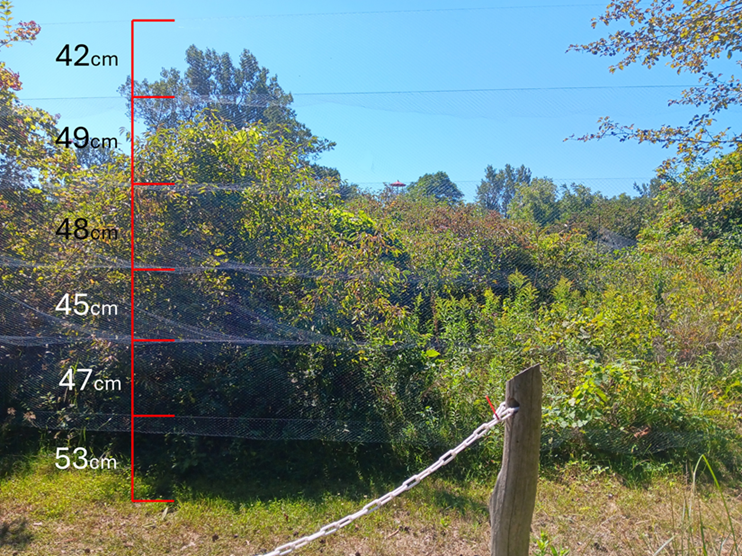
Figure 1: A picture of LPBO’s net 8 showing the net panels and the heights they span.
The average net panel span was 45 cm. Nets were opened 30 minutes before sunrise and mist netting proceeded for six hours, weather permitting, every day from August 15, 2025, to September 3, 2025. Nets were closed for periods of rain or strong wind. All net closures were included in the six hours of netting time. Nets were checked every 30 minutes in numerical order, removing all caught birds as well as debris each time.
Data collection
The number of birds caught in each net panel was recorded by using small, numbered clothespins. Clothespins were marked one through five, representing the five net panels. Extractors carried a suitable number of these with them for each net check. All birds caught were placed in individual cloth bags to be transported to the banding lab. A clothespin corresponding to the panel the bird had been caught in and a different clothespin indicating which net the bird was caught in were attached to the bag (Figure 2).
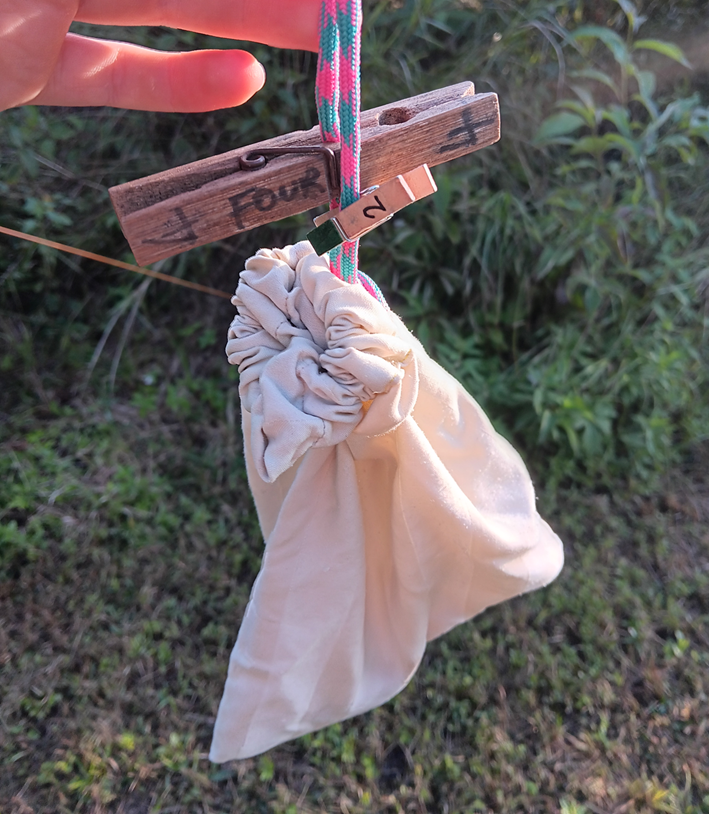
Figure 2: A bird in a bag while being transported to the banding lab. The bag has two clothes pegs on it. The larger one is which net the bird is from (standard protocol). The smaller one is which net panel the bird is from (for this project).
During busy periods of mist netting (roughly >18 birds per 30 min), not all birds caught had their net panel recorded due to time constraints. No preference was given when omitting the net panel clothespin from a caught bird.
At the banding lab, each bird’s species was identified, and a standard band was placed on their right leg. In addition, weight (measured to the nearest 0.1 g), age (using the Wolfe, Ryder, Pyle system), sex, band number, capture time, release time, mist net number, mist net panel, and date were recorded for each bird processed. If a bird had been captured previously that same day, the bird was released immediately without recording data from that capture. For this study, species, sex, mist net number, and mist net panel were used in the data analysis.
The height of each fully opened mist net panel as well as the height from the ground to the bottom of the lowest panel was measured for each individual net (Figure 1). This allowed the determination of the capture height range for each bird caught — that is, the height from the ground to the bottom and top of the panel (e.g. Net 10, panel 3 gets converted to 137 cm – 185 cm from the ground). The midpoint for each height range was used as the capture height for each bird. All entries were then pooled, grouped by species, and arranged in alphabetical order. Any entry that was missing the net panel or species was discarded. Any species that had data for less than 10 birds were also discarded. In total, 248 birds from 12 species were used (Appendix).
Expected foraging height for each species caught was researched using Birds of the World’s Diet and Foraging section. The exception was Setophaga tigrine (Cape May Warbler) whose foraging height was found from the study “Social and Foraging Behavior of Warblers Wintering in Puerto Rican Coastal Scrub” by William Post (1978).
Data Analysis
To assess correlation between capture height and expected foraging height, a scatter plot and Pearson correlation test were used.
Six species with a sufficient number of birds caught (at least 14) were selected for a two-way ANOVA test that was used to test if there was a significant difference in capture number between the five mist net panels. The data was assumed to be of normal distribution. A Tukey’s test was then used to determine if there was a significant difference for each pair of panels.
To assess if sex influenced capture height, total numbers and average numbers of male and female birds caught in each panel were graphed. Additionally, for both male and female sexes, a two-way ANOVA and a Tukey’s test were used to test if there was a significant difference in the capture number between the five mist net panels. This data was also assumed to be of normal distribution.
Results
Across all species, there was a slight correlation (r = 0.057) between expected foraging height and capture height (Figure 3). The Pearson correlation test resulted in p-value = 0.3, which is not significant.
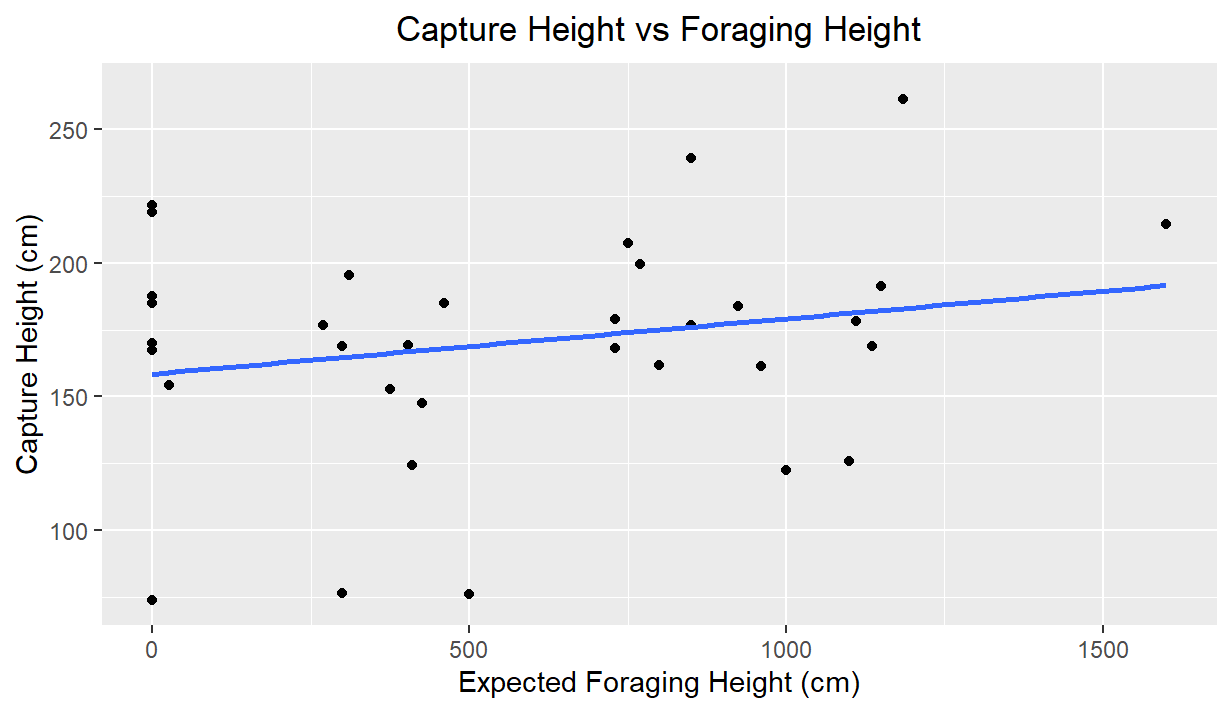
Figure 3: Scatter plot showing linear regression line of each species’ expected foraging height and capture height.
The two-way ANOVA test showed that for each of the six species tested, there was no significant difference in capture number among the five net panels (Table 1). However, the Tukey’s test for Empidonax minimus (Least Flycatcher) demonstrated that there was a significant difference (p-value < 0.05) in capture number between panels 5 and 1 (Appendix).
Table 1: Results from two-way ANOVA testing significant difference in capture number between the 5 mist net panels for specific bird species.

The two-way ANOVA test for sex showed that for each sex tested there was no significant difference in capture number among the five net panels (Table 2). The Tukey’s test also did not yield a significant difference in capture number between any pairs of panels. Figures 4 and 5 show the average number of birds caught in each panel for both males and females, respectively.
Table 2: Results from two-way ANOVA testing significant difference in capture number between the 5 mist net panels for the two sexes.

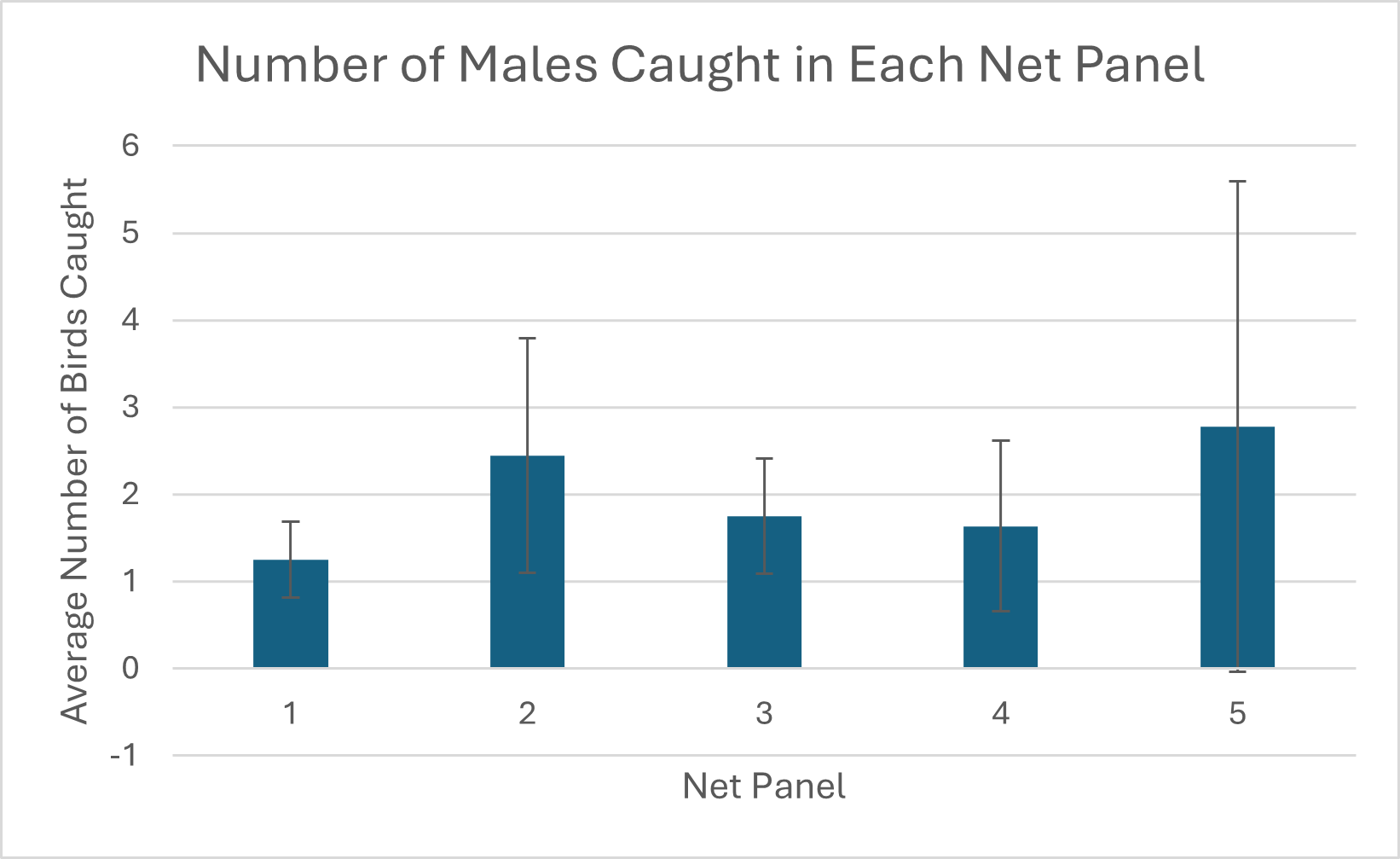
Figure 4: Average number across all nets of male birds caught in each net panel with error bars.
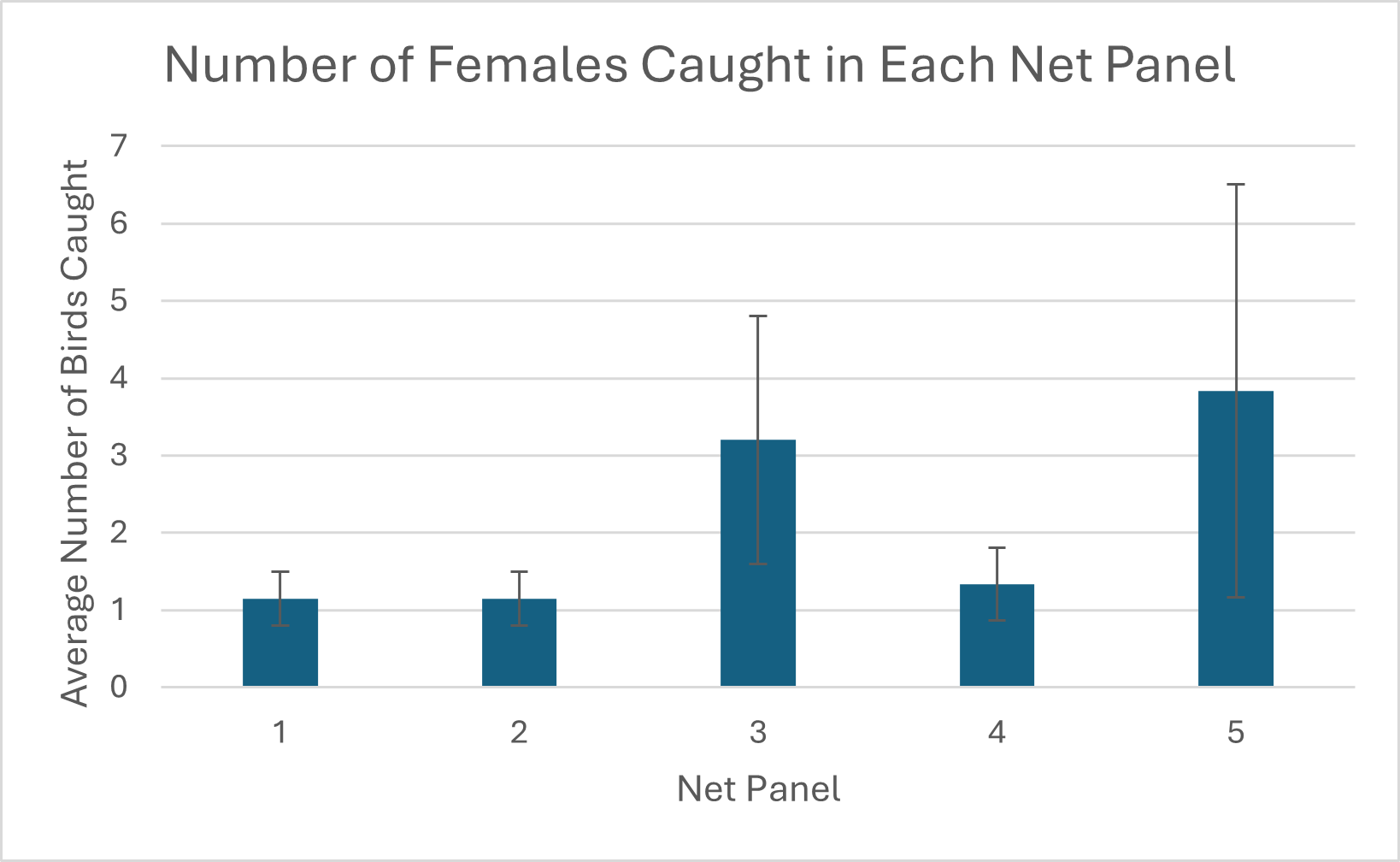
Figure 5: Average number across all nets of female birds caught in each net panel with error bars.
Discussion
This study addressed whether the expected foraging height of bird species or the sex of the bird correlates with the height at which they get captured in mist nets. With all species studied considered together, no significant correlation was found between expected foraging height and capture height. Within each of the six select species, there was no significant difference in capture height. The exception was that there was a significant difference in Least Flycatcher capture number between panel 5 and 1. Additionally, within all species there was no significant difference in capture height between sexes.
These results suggest that the height of ground level mist nets presented no capture bias based on species’ foraging height or sex of the bird, within the species studied. Similarly, within a ground level mist net, no evidence was found of capture bias based on the species of the bird, with the exception of the Least Flycatcher.
This study’s results differ from Remsen and Good’s (1996) computer model predictions, which predicted a strongly affected probability of capture by a bird’s vertical activity increasing by only one metre. This study’s results also differ from Tattoni and LaBarbera’s results, where they found significant differences in the capture number between panels. Additionally, their results agreed with their expectations from the taxa’s life history characteristics, including foraging height, where sparrows that foraged on the ground were biased towards the lower panels. This study’s results found no correlation between foraging height and capture panel and found almost no species bias towards certain panels.
In this study, many environmental variables were not controlled including habitat, foliage species and height near the net, angle and frequency of light striking the net, human disturbances, amount of wind, wind direction, pre-dawn condensation, and temperature. These variables were most likely different at each net. Variables such as net tension were kept roughly the same throughout all 14 nets but did have some variability. The lack of controlling these variables could introduce uncertainty in the results produced.
Of all these variables, vegetation composition and height as well as weather could have had the largest impact on this study. Some species tend to prefer dense shrubbery while others prefer open perches. This means that a bird’s capture height is likely influenced by the type of vegetation and habitat surrounding the nets. Additionally, tall trees or low bushes would likely influence vertical activity and thus capture height. The impact of this uncontrolled variable is supported by Mallory et al.’s (2004) study, which found that canopy height explained 69% of the variation in their capture rates. Sun and shade placement can also have a large impact on where birds are located during the mist netting period. Additionally, wind can increase mist net visibility. These weather factors can change the vertical distribution of birds and influence capture height. In addition, the significant difference in capture number of Least Flycatchers between panels 5 and 1 could be caused by procedure error or randomness that looks like a significant difference.
Further research could include controlling or documenting more environmental variables such as vegetation or habitat. This type of study would also benefit from more birds captured within a larger time span (across breeding and non-breeding seasons) or from different places.
In summary, this study showed minimal to no capture bias in ground level mist nets based on foraging height, sex, or species. This is favourable for current mist netting procedures and supports their use as an appropriate sampling method for bird observatories and research stations.
References
Greenberg, R., & Gradwohl, J. (1986). Constant density and stable territoriality in some tropical insectivorous birds. Oecologia, 69(4), 618-625.
Holbech, L. H. (2020). The elevated mist‐net frame: A robust and versatile manoeuvrable design for capturing upper strata birds. Methods in Ecology and Evolution, 11(9), 1086-1091. https://doi.org/10.1111/2041-210X.13425
Mallory, E. P., Brokaw, N., & Hess, S. C. (2004). Coping with mist-net capture-rate bias: canopy height and several extrinsic factors. Studies in Avian Biology, 29(1), 39.
Post, W. (1978). Social and Foraging Behavior of Warblers Wintering in Puerto Rican Coastal Scrub. The Wilson Bulletin, 90(2), 197–214. http://www.jstor.org/stable/4161051
Remsen Jr, J. V., & Good, D. A. (1996). Misuse of data from mist-net captures to assess relative abundance in bird populations. The Auk, 113(2), 381-398. https://doi.org/10.2307/4088905
Tattoni, D. J., & LaBarbera, K. (2022). Capture height biases for birds in mist-nets vary by taxon, season, and foraging guild in northern California. Journal of Field Ornithology, 93(1). https://doi.org/10.5751/JFO-00021-930101
Tattoni, D. J., & LaBarbera, K. (2023). A simple method to estimate capture height biases at landbird banding stations: opportunities and limitations. Journal of Field Ornithology, 94(4). https://doi.org/10.5751/JFO-00379-940406
Acknowledgements
This study was conducted in partnership with the Young Ornithologist’s Internship at Long Point Bird Observatory. A special thank you to LPBO for letting me use their equipment and mist netting and banding protocol as the basis for my study.
This study would not have been possible without the help from volunteers and staff at LPBO’s Old Cut Field Station, notably: Emma Buck, Jackie Quinones, Sam Eberhard, and Sam Lewis.
Appendix
Table 1: Species used in data analysis for correlation between foraging height and capture height.

Table 2: Results from Tukey’s test determining significant difference for each pair of mist net panels for Least Flycatchers.
