Aikman Khunkhun — Year 2, Life Science
Abstract
Around 20 million people in Canada are affected by digestive disorders according to the Canadian Digestive Health Foundation (Koughnet, 2012). Recently, many dietologists and scientists have begun to recommend individuals suffering with such diseases to consume fruits containing proteases allowing for symptom relief. The ultimate purpose of this experiment was to investigate the proteolytic activity of three fruit-derived enzymes including papain, bromelain, and actinidin on gelatin samples at a controlled incubation period with room temperature serving as a control. Each cysteine protease was extracted from the fruits through mechanical filtration and centrifugation. Solid gelatin samples were submerged in the crude enzyme extracts and weighed periodically. Both actinidin and bromelain demonstrated significant effectiveness, causing an overall percent decrease in mass of the samples. When the gelatin was placed in papain and water, there was a percent increase in mass mainly due to improper enzyme extraction and osmosis. By examining these results, the data can provide insight as to the consumption of which fruit may yield the most rapid/effective results for those struggling with gastrointestinal disorders.
Introduction
The human body’s digestive system acts as a highly complicated recycling plant where it collects food from the mouth and carries it throughout a continuous tube extending to the anus. Throughout this transportation, various nutrients are absorbed and sent into the bloodstream while other indigestible material is removed as waste through defecation. For the facility to be able to operate efficiently, there is a high demand for specific machinery to process and break down the material and this is where enzymes come into play.
Enzymes are known as biological catalysts that bind to substrates speeding up hydrolysis or synthesis chemical reactions while avoiding being consumed in the process. The gastrointestinal tract consists of varying enzymes that bind to specific substrates, all of which function appropriately at certain pH levels and temperatures. Proteases are a specific type of enzyme that play a crucial role within an organism’s digestive system by breaking down large protein molecules into shorter peptides or amino acids. This process, known as proteolysis, is essential in avoiding disorders such as protein malabsorption where the human body is unable to absorb necessary nutrients it needs to carry out various biological functions.
In such cases, medical professionals will prescribe a specific type of clinical therapy to patients known as PERT (Pancreatic Enzyme Replacement Therapy) (Higuera, 2024). At the core, this treatment requires individuals to consume capsules containing pancreatic enzymes derived from pig pancreas tissue to allow for proper chemical digestion of various substrates including proteins. A similar natural remedy comparable to PERT includes the consumption of certain foods containing digestive enzymes such as proteases, lipases, amylases, or nucleases to support the gastrointestinal system. Many of these enzymes can be found/derived from components of fruit (Raman, 2023). One of the first enzymes to be discovered from papaya was known as papain by a British chemist, Gopal Chunder Roy (Menard and Storer, 1998). Over the following years, the pure form of papain was discovered and its overall structure including its active site was clearly identified. At this point, various other enzymes along with their applications had also begun to be investigated such as ficain, ananain, etc.
Papain is a cysteine protease derived from papayas. It can be found in the various parts of the fruit including the leaves, roots, etc. It is one of the proteolytic enzymes that has various uses/benefits some of which include supporting digestion, relieving inflammation, fighting against infections, etc. Various research articles have proven that papain as a dietary supplement has been effective in reducing bloating/constipation and promoting gut health. Similar to papain, bromelain is another enzyme that is able to break down proteins. It is found in the stem and fruit of pineapple. It has been used traditionally in the past for medicinal purposes and also has proved to be effective in supporting individuals with chronic pancreatic insufficiency. Finally, kiwifruit also contains an enzyme known as actinidin. Many scientists and dietologists recommend kiwifruit to ease digestion and believe that the presence of the protease along with its high fibre content is one of the main reasons it enhances gut mobility (Raman, 2023).
This study aims to quantitatively compare the gelatin digesting activity amongst the three fruit-derived enzymes/proteases including bromelain, papain, and actinidin. The findings of this research can serve as informative support for those seeking fruit-based remedies as to which option may produce the most rapid and/or effective results. By comparing the different fruit enzymes, the results will reveal which enzyme has the highest enzymatic activity and/or which fruit contains the highest enzyme concentration to support digestion. It is hypothesized that bromelain will result in the greatest percent decrease in gelatin mass due to its high proteolytic activity and previous usage as a dietary supplement to aid gastrointestinal function.
Materials and Methods
Gelatin Preparation
15 g of gelatin powder was measured in a 250 mL beaker using an electronic balance. 300 mL of distilled water was measured using a 500 mL graduated cylinder and boiled in a kettle. The distilled water was then transferred to a 500 mL beaker, after which the gelatin powder was added and stirred until it was fully dissolved. Then, the solution was poured into an ice cube tray and left to solidify in the refrigerator.
Pineapple
The core of the pineapple was mechanically sectioned using a kitchen knife and weighed on an electronic balance. Excess material was removed until the sample mass reached 50 g.
Kiwi
The kiwi was sliced in half, and the white centre was extracted using a kitchen knife. The remaining green flesh and peel were weighed on the scale and excess material was removed the until the mass reached 50 g.
Papaya
The papaya was sectioned, all seeds were extracted, and the inner mesocarp tissue was removed. The tissue was weighed on an electronic balance and portioned to obtain a mass of 50 g.
Filtration
50 g of each fruit were combined with 50 mL of distilled water and ground using a mortar and the pestle. The homogenate obtained was passed twice through a coffee filter into a 100 mL beaker to yield a clear filtrate for subsequent centrifugation.
Centrifugation
The 50 mL filtrates were transferred into 1.5 mL microcentrifuge tubes using a transfer pipette. The samples were centrifuged at 10,000 × g for 20 minutes at room temperature to remove insoluble material using a tabletop high-speed centrifuge 24D model (Labnet). Finally, the colourless supernatant was extracted using a H1000 micropipette and transferred to a 50 mL falcon tube to be refrigerated and stored as the crude bromelain/papain/actinidin enzyme.
General Procedure
Each of the solidified gelatin samples/cubes were excised from the tray using a kitchen knife. The initial mass of each cube was measured in a beaker using an electronic balance and recorded. The mass of each cube varied by 1-2 g. Then, one gelatin sample was submerged in the supernatant of each fruit in 100 mL beakers and incubated at room temperature. The initial/final pH and temperature of the immersion solution was recorded using a pH probe and thermometer. The mass of the gelatin samples was measured and recorded at 30-minute time intervals while the samples remained submerged for a total duration of 3.5-4 hours. All samples were blotted dry using a paper towel to prevent the water from affecting the mass measurements.
Results
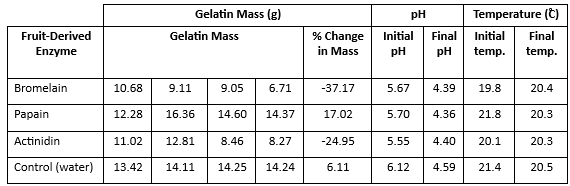
Figure 1. Raw experimental data of the gelatin mass measurements (g) at 30-minute intervals along with a calculated percent change in mass for each derived enzyme. Additional confounding variables such as pH and temperature were also measured at the start and end of the submersion period.
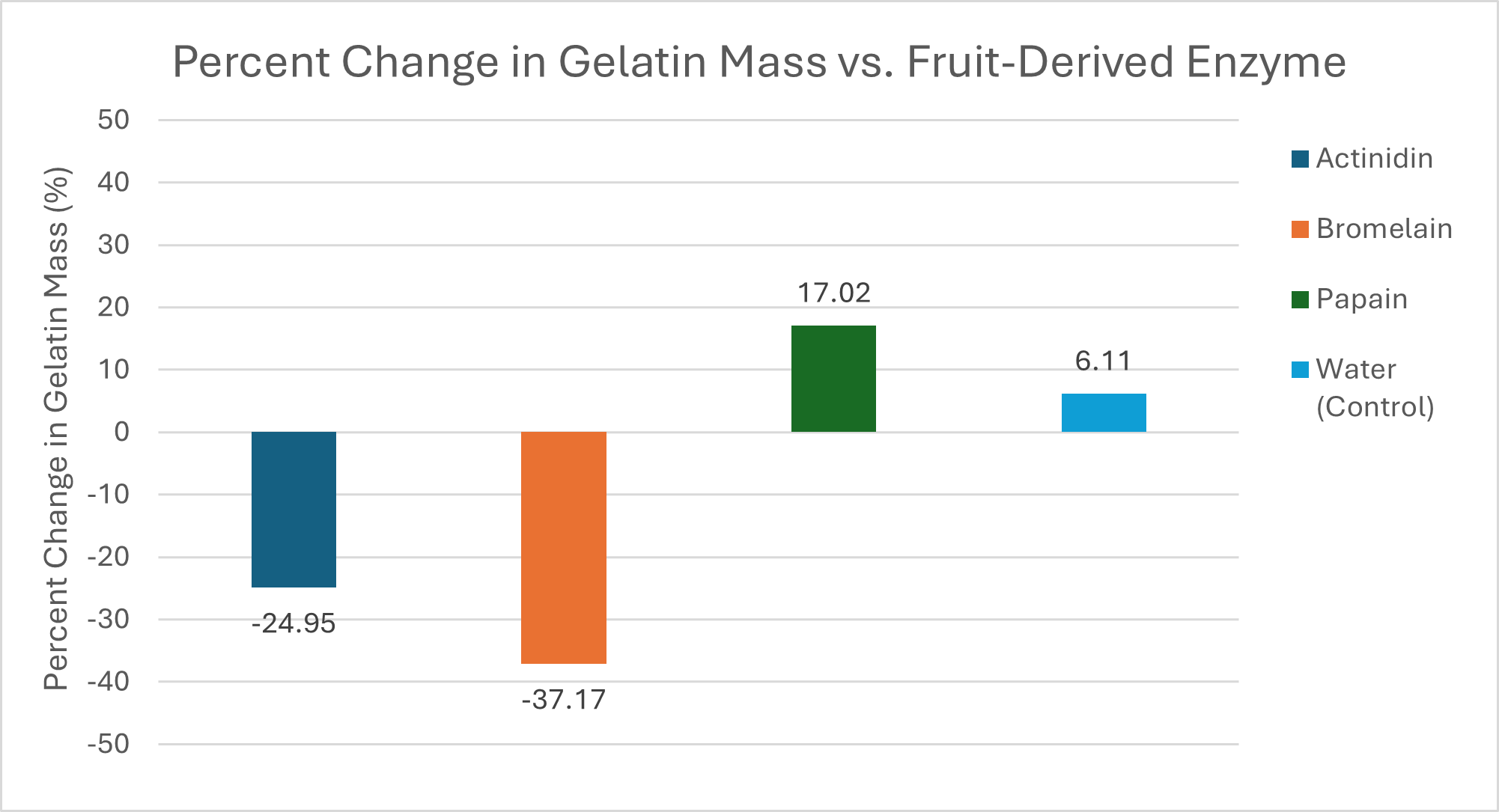
Figure 2. Percent change in mass of each gelatin sample for every fruit-derived enzyme as well as water (control).
Discussion
The results of this study indicate that bromelain derived from pineapple was most effective at digesting the gelatin sample decreasing its mass from 10.68 g to 6.71 g resulting in a 37.17% decrease in mass thereby supporting the initial hypothesis and indicating that consumption of pineapple is the most effective natural remedy in aiding constipation as well as promoting gut health. Similarly, actinidin derived from kiwi resulted in a 24.95% decrease of the gelatin mass indicating it is also a good option for those struggling with gastrointestinal disorders such as protein malabsorption.
When submerged in water, the gelatin increased in mass by 6.11 percent. This is mainly due to osmosis which is when the water in the solution moves from the low solute concentration to the high solute concentration causing the gelatin block to swell. Finally, the gelatin increased in mass by 17.02 percent when submerged in the papain solution. The reason for the increase could be due to improper extraction of papain from the papaya. High concentrations of the enzyme tend to be found in the milky latex within the skin of the unripe fruit which means blending up the peel of the fruit with distilled water as done in this experiment would only allow for minimal extraction and therefore, minimal digestion of the gelatin sample.
The results of this research can also be supported by a previous study conducted in 1970. Bromelain has been used traditionally in the past for medicinal purposes and also has proved to be effective in supporting individuals with chronic pancreatic insufficiency. Individuals with chronic pancreatic insufficiency essentially have a pancreas that is unable to produce a sufficient amount of enzymes that the body needs to digest certain substrates such as proteins, fats, etc. 12 adults with this disorder were used to compare two types of treatments (Knill-Jones et al., 1970). One of the treatments was known as Pancrex V forte which was a pancreatic enzyme preparation. The other treatment was referred to as Nutrizym which was a similar preparation along with a shell of bromelains. Nutrizym was much more effective in reducing the mass of the participants’ stool indicating better fat absorption. To measure protein digestion, the participants were required to consume a gelatin meal. After assessing the urinary excretion of hydroxyproline (an amino acid in gelatin), Nutrizym caused a much higher amount to be released in the start compared to the Pancrex V forte. Although, over time the results were similar which indicates that Nutrizym simply acted faster than the opposing treatment. To ensure that there were no additional factors or variables that allowed for these results, the researchers also decided to the Nutrizym treatment without the shell of bromelains and the results were very similar to Pancrex V forte. This is an indication that the additional bromelains contributed to the rapid protein digestion as well as the efficient fat absorption.
Many scientists and dietologists also recommend kiwifruit to ease digestion and believe that the presence of the protease is one of the main reasons it supports gut health. An additional study conducted on 33 constipated patients and 20 healthy individuals is able to support the findings of this research experiment as well (Chan et al., 2007). Each person was required to eat kiwis twice a day for 4 weeks. 55.5 % of the constipated volunteers showed significant improvement. There was also a mean increase in their average CBSM (complete spontaneous bowel movement) from around 2.2 times a week to 4.4. The individuals also reported an improvement in terms of satisfaction of bowel habit, bothersome of constipation, transit time, etc. One aspect to note about this study is that all participants were of the Chinese race meaning there was a lack of diversity in terms of the volunteers used. To further this research, it would be beneficial to investigate how the consumption of kiwifruit affects the bowel movement for patients of various races.
A limitation of this experiment includes the limited number of trials conducted. To maintain a relatively concentrated crude enzyme solution, no dilutions were performed. This allowed only 50 mL of each enzyme to be extracted. To expect a significant percent increase/decrease in mass of the gelatin blocks, only one block was submerged in each of the solutions. To allow for more accurate and precise results, conducting more trials may have further supported the conclusions made from this research. Another source of error refers to the extraction process of papain from papaya. To extract papain, a 1-2mm incision must be made in the surface on the surface of an unripe papaya (Foley, 2024). Most of the enzyme is concentrated in the white, milky, latex sap that drips out of the incisions. This sap is usually dried and grinded into a powder which can be dissolved into water. In this experiment, the peels of the unripe papaya were blended in hopes for some extraction of the sap as well as to remain consistent with the methodology used for the other fruits.
Future work within this field could include performing extensive protease extraction from each of the fruits using aqueous two-phase partitioning as a follow-up method to the centrifugation. This method involves using polyethylene glycol and potassium phosphate to create a two-phase system allowing the enzyme to sit on either layer partially purifying it. After extracting the layer with the enzyme, a dialysis bag can be used to filter out any remaining PEG or salts and completely purify the enzyme solution. This may provide more accurate results rather than simply using the supernatant of each fruit which represents the crude enzyme extract. Along with this, having a refrigerated centrifuge at 4˚C may have allowed for better preservation of enzymatic activity and doing up to 3 trials per fruit would have resulted in more accurate data.
Another potential area for future work with enzymes derived from fruits may include analyzing the enzymatic activity of one particular fruit enzyme at different conditions (changing the pH, temperature, etc.). This experiment would be a great representation of the human body’s digestive system and how different digestive enzymes operate best in different regions with varying pH levels and temperatures.
References
Chan, A. O., Leung, G., Tong, T., & Wong, N. Y. (2007). Increasing dietary fiber intake in terms of kiwifruit improves constipation in Chinese patients. World journal of gastroenterology, 13(35), 4771–4775. https://doi.org/10.3748/wjg.v13.i35.4771
Foley, J. (2024) Can Papaya Enzyme Help You Digest Faster? A Look at the Possible Benefits and Side Effects. GoodRx. https://www.goodrx.com/well-being/gut-health/papaya-enzyme-benefits
Knill-Jones, R. P., Pearce, H., Batten, J., & Williams, R. (1970). Comparative trial of Nutrizym in chronic pancreatic insufficiency. British medical journal, 4(5726), 21–24. https://doi.org/10.1136/bmj.4.5726.21
Menard, R. & Storer, A. (1998) Papain – manual. Worthington. https://www.worthington-biochem.com/products/papain/manual
Muss, C., Mosgoeller, W., & Endler, T. (2013). Papaya preparation (Caricol®) in digestive disorders. Neuro endocrinology letters, 34(1), 38–46. https://pubmed.ncbi.nlm.nih.gov/23524622/
Raman, R. (2023). 12 Foods That Contain Natural Digestive Enzymes. Healthline. https://www.healthline.com/nutrition/natural-digestive-enzymes
Valencia, H. (2024) What Is Pancreatic Enzyme Replacement Therapy for EPI (Exocrine Pancreatic Insufficiency)? Healthline. https://www.healthline.com/health/exocrine-pancreatic-insufficiency/pancreatic-enzyme-replacement-therapy
Vankoughnet, K. (2016). Simple fixes for common digestion problems. Canadian Living. https://www.canadianliving.com/health-fitness/prevention-and-recovery/article/simple-fixes-for-common-digestion-problems