Krystyn Kurzyna — Year 2, Life Science
Abstract
Biosonification, the conversion of biological signals into audible sounds, has been explored as a new medium for artistic and musical pursuits. However, little is known about its potential scientific applications. It promises to be a non-invasive, cost-effective method of measurement. This experiment explores the use of biosonification, using a custom-built device, on aloe vera plants, to test their responses to various stimuli, including touch, water, and darkness. Touch and water evoked an immediate increase in signal strength, while darkness caused a quick decrease. Under prolonged touch and darkness, as well as longer water absorption time, the plants returned to roughly their baseline signal and activity level. Further research is necessary to determine the accuracy of such a device and its potential use in domestic environments.
Introduction
Plants send electrical signals to and from their various organs, corresponding to stress and activity levels in the plant. Biosonification is a method of detecting these signals, which involves converting electrical signals from into corresponding audible sounds. It is often used as a form of art – creating music or ambient sounds and encouraging connection with nature. Several different companies, including MIDI Sprout, PlantWave, Damanhur, and Instruo, have produced biosonification instruments for domestic use. The creator of MIDI Sprout, Sam Cusumano, has published the open-source code for his biosonification device. Many individuals have tried to create their own plant music devices, and several artists create and share music produced using biosonification.
Kurundkar et al. (2023) noticed that, although plant signals could be converted quite well into aesthetic and musical sounds, there were some limitations, as the machines were often complex, platform dependent, and expensive. Additionally, the instruments often focused more on producing music than on analyzing the plant’s biological processes, responses to stimuli, and behaviour under different conditions. Dai et al. (2025) realized that many sonification systems, while lightweight, could negatively impact plant health, and sought to develop a new, healthy, and sustainable approach to biosonification, encouraging human-plant interaction. (Dai et al., 2025, p.2) Gagliano et al. (2012) stress the need for further research in “acoustical ecology, auditory mechanics and plant physiology.” (Gagliano et al., 2012, p.3) They say it will boost understanding and introduce new perspectives on plant bioacoustics.
Fromm and Lautner (2007) analyze the kinds, movement, and effects of electrical signals in plants, concluding that changes in temperature, light, and touch, can cause internal electrical signals. They gave examples of different plants reacting to different stimuli, recorded the different physiological results, and noted that further study of electrical signals in plants will give rise to significant questions and discoveries in the realm of plant communication and information exchange.
Biosonification of Plants
Using biosonification to determine a plant’s reaction to or behaviour under certain circumstances is significant because it allows a broad, relatively easy, fast, and non-invasive view into the internal mechanisms of the plant. Biosonification is unique in that it enables “real- time interaction between the plant’s biodata and musical sounds.” (Kurundkar et al., 2023, p.1) The company PlantWave, founded by Joe Patitucci and Alex Tyson, describes that its product, PlantWave measures microfluctuations in conductivity between two points on a plant, corresponding to the varying amounts of water between them. The variation is graphed over time, producing a wave that is then translated into pitch. Each note expresses a change happening within the plant in the moment, with greater distances signifying greater changes. (PlantWave, n.d., FAQ no. 2)
Biosonification may provide a new perspective on intra-plant communication, plant biosignals, their causes, and their functions. Biosonification appears to be less direct than other, more complex and invasive techniques, although little is known about its effectiveness in measuring different internal plant behavior in various circumstances, as well as its usefulness in scientific settings. This study aims to use biodata sonification without any aesthetic or musical additions to discover the electrical signals produced by aloe vera plants when they are put under different conditions, including darkness, watering, and touch.
Materials and Methods
This experiment used three potted Aloe Vera plants (Home Depot), labelled Plants 1, 2, and 3 respectively. The device was constructed and programmed using open-source code and instructions provided by Sam Cusumano on GitHub. The electrical components needed were a solderless breadboard (Science World), a 555 timer IC (BC Robotics), an Arduino Uno (Arduino), capacitors (RP Electronics, BC Robotics), resistors (Science World), a potentiometer (SparkFun Electronics), LEDs (BC Robotics), an input jack (PiShop), a MIDI jack (PiShop), jumper wires (SparkFun Electronics), and electrode leads (Harpimer) and pads (Gvmsor). The Arduino Software was used.
To detect the internal signals of the plants, two electrodes were attached to leaves on opposite sides of each plant. Several conditions were tested twice each over a period of 30 seconds: once immediately after the plant experienced a new condition, and once 1 hour after being placed in that condition. These included the following: how the plant responded when it was being given 20 mL of water, when it was covered by a box to simulate darkness, and when pressure was applied to one of its leaves using a clothespin. The plants were also measured when they were dry and untouched as a control. Other software was required for the machine to produce audible noise, so the numbers outputted by the Arduino Serial Monitor, which corresponded to the plants’ signals, were recorded every 0.5 seconds for a 30– second interval and averaged. To ensure accuracy, each of the tests were repeated on each of the plants.
Results
Figure 1 displays the control and effects of water, darkness, and touch on all three plants. The highest signal recorded was immediately after pressure was applied, while the lowest signal occurred immediately after darkness exposure.
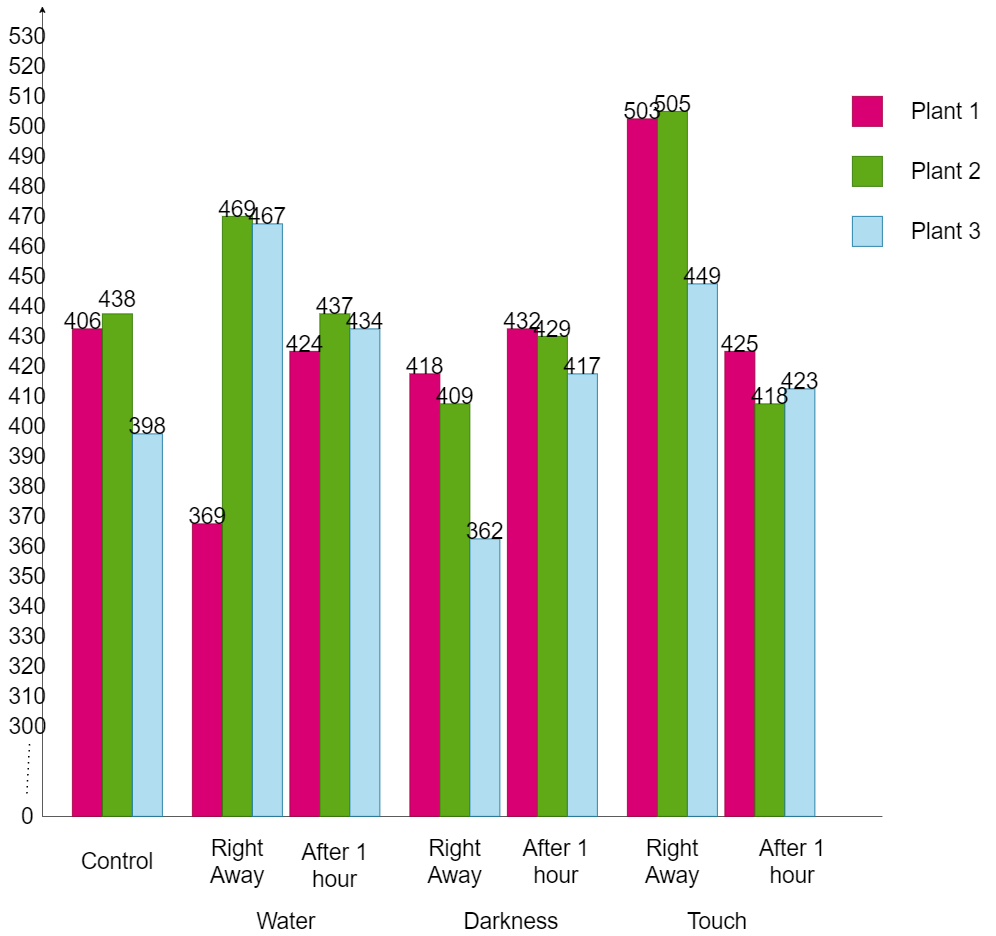
Figure 1: Average Signal Strength of Plants
Discussion
Based on the results shown in Figure 1, immediate touch appeared to produce the strongest increase in signal intensity. Immediate watering causes the second strongest signal. Immediate darkness decreases signal strength. All the results after one hour are similar to each other and to the control. This seems to indicate that the plant has quick responses to changes in condition but soon returns to its normal activity level.
Interesting observations that were not recorded include the progression of all the numbers. All the numbers produced by the machine should have been recorded, instead of the average. The touch seemed to trigger a quick and strong signal through the plant. The water was less of a sudden strength and more of a gradual increase. The darkness appeared to reduce signal intensity rapidly.
Several inconsistencies could have affected the results. These include that the results were measured during different times of day, that the cover used to create darkness touched the plant, and that the pressure was not applied at a set distance from the electrode. The device was fairly sensitive to its environment, and device noise or surrounding disturbances could have been picked up as part of the plants’ signals. The order in which the different conditions were tested and the interval of time between each testing should have been kept consistent, as the plant’s response to a certain condition could have been affected by the condition it was previously in. A significant limitation was that there was only one device and only three samples. If the device had failed completely or broken, there would have been no other way to obtain data. Additionally, the data reflects the water content in the leaf more than the specific signals, although the two are related. (PlantWave, n.d., FAQ no. 2)
Biosonification allows for real-time data from the plant as it undergoes internal processes or responds to external stimuli. It is non-invasive and quite harmless to the plant. Future work could involve converting the live numerical output into audible output or live graphs, which are easier to interpret. The device could be used for long-term measurement, for example measuring or graphing plant activity over the course of an entire day or even several months or comparing activity during different times of day or different seasons. Further testing on different plant species or the best electrode placement, as well as how exactly each condition internally affects the plant would be significant. The device could also be developed for domestic use; people could potentially use it to monitor plant health in domestic environments.
References
Dai, Y., Sareen, H., & Yasuaki Kakehi. (2025). Sonifying Aquatic Plant Photosynthesis: A Music Generation System for Everyday Engagement and Care. DIS 2025 – Companion Proceedings of the 2025 ACM Designing Interactive Systems Conference: Designing for a Sustainable Ocean, 452–455. https://doi.org/10.1145/3715668.3736347
Dictionary.com | Meanings & Definitions of English Words. (2023). Dictionary.com. https://www.dictionary.com/browse/bioacoustics
FROMM, J., & LAUTNER, S. (2006). Electrical signals and their physiological significance in plants. Plant, Cell & Environment, 30(3), 249–257. https://doi.org/10.1111/j.1365-3040.2006.01614.x
Gagliano, M., Mancuso, S., & Robert, D. (2012). Towards understanding plant bioacoustics. Trends in Plant Science, 17(6), 323–325. https://doi.org/10.1016/j.tplants.2012.03.002
Kurundkar, S., Lathiya, D., Kurade, S., Likhitkar, P., & Lokhande, T. (2023). Bio-sonification – Converting Microcurrent Fluctuations of Plant Leaves into Sound. 2023 7th International Conference on I-SMAC (IoT in Social, Mobile, Analytics and Cloud) (I-SMAC), 831–836. https://doi.org/10.1109/i-smac58438.2023.10290349
Miller, P. V., & Cox, C. (2024). Music from Plant Biosignals. Music Theory Online, 30(1). https://doi.org/10.30535/mto.30.1.6
PlantWave. (2025). Science. PlantWave. https://plantwave.com/en-ca/pages/science