Sana Seraj — Year 3
Mentor: Teresa Seifried, Serena Chin
Introduction
According to the United Nations Environment Programme, eight million tonnes of plastic end up in the ocean each year, which can be ingested as microplastics by marine life (UNep, 2017). Microplastics can absorb organic toxicants from the sea surface microlayer, relaying harm to organisms that ingest them. Additionally, microplastics accumulate in tissues as organisms are unable to digest them. This allows the chemicals to biomagnify and create harm at even higher levels in the food chain (Costigan et. al, 2022).
Existing methods to remove microplastics from water are limited in sustainability or efficiency (Sayam et al, 2025). While previous research on marine microplastic mitigation has provided valuable insight into colloidal-based microplastic removals, many procedures use reagents that are harmful to marine life and non-biodegradable (Srinivasan et al, 2025). Conventional methods of microplastics removal rely on flocculation. Flocculation clumps small particles suspended in water into a bigger particle called a floc using chemicals called flocculants (Malvern Panalytical, 2024). Common flocculants aluminum sulfate and ferric chloride are harmful to aquatic life if swallowed, causing long-lasting effects (Safety Data Sheet, 2015, Safety Data Sheet, 2022). Consequently, biopolymers are an eco-friendly alternative (Eco-Friendly Water Treatment, 2024).
Plant-based flocculants like chitosan, tannins, cellulose, alginate, gums and mucilage have been investigated as potential substitute flocculants (Satle et. al, 2012). However, studies on Xanthan gum are rare despite its potential. Xanthan gum (XG) is plant-based flocculant which is a cheap, effective emulsifier commonly used in cooking that’s widely accessible (Pullen, C., 2025). It has a cellulose backbone and trisaccharide side chains of mannose and glucuronic acid, and is made by fermenting the bacteria Xanthomonas campestris (Vardhan et al, 2025). This structure allows it to be a very effective stabilizing agent. It also allows for strong thermal stability (Kulkarni et al, 2015). The effectiveness is due to its carboxyl groups that help make large flocs by conferring charges (Oropeza-Guzmán, M. T., & Araiza-Verduzco, F., 2023). The carboxyl groups provide ionic interactions and advanced bridging between the flocculants, these molecular interactions allowing for polymer bridging and coagulation (Yang et al, 2024). Studies such as Sudirgo et al. found XG to be an effective coagulant aid as removal efficiency increases with XG concentration. Thus, this study is based on observing the effects of a natural polysaccharide (xanthan gum) as a flocculant for microplastic capture, due to its renewable, sustainable nature.
This study aims to establish XG as an effective flocculant to capture various polymer types from water. Through the past research indicating that XG holds promise as an alternative to current flocculants, we aim to show that an XG concentration as low as 3% w/v efficiently removes PET and PP microplastics from solution. Thus, we establish XG as a viable flocculant for use in marine systems and hope to establish more widespread use.
Materials and Methods
Microplastic samples:
This study utilized polyethylene terephthalate and polypropylene as the model system for plastics removal. We provide an overview of the samples shared with us by our collaborators at UBC.
Table 1 overviews the microplastic samples used. Our collaboration partner from UBC shared these samples with us. They purchased polyethylene terephthalate (Nanochemazone) and Polypropylene (Goonvean Fibres Ltd).

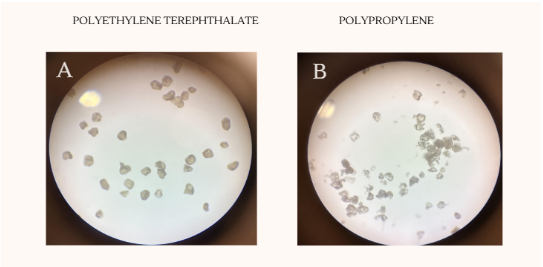
Figure 1: Light Microscopy Images of the Studied Microplastics, A- Polyethylene terephthalate, B-Polypropylene.
Methods
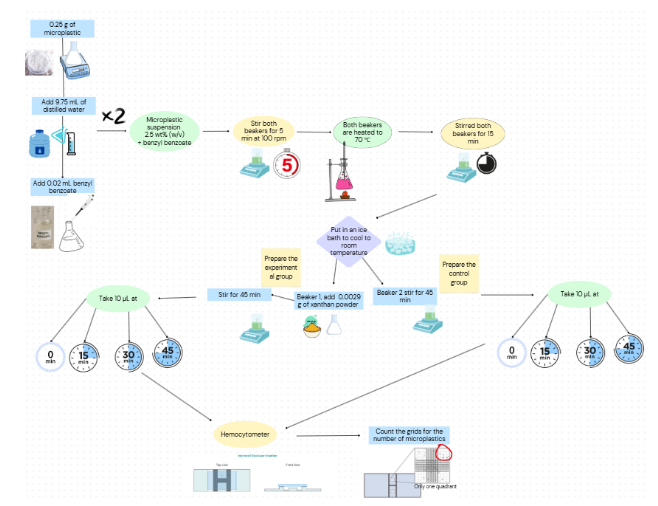
Figure 2: Graphical Representation of Microplastic Removal Workflow
Note. Only one quadrant out of the 4 was counted and it was assumed that the count was uniform across.
Microplastic Suspension Preparation
A 2.5 wt% (w/v) aqueous suspension of microplastics was prepared by adding 0.25 g of microplastic powder to 9.75 mL of distilled water (Great Value) in a 100 mL beaker. 2 microplastic solutions were prepared for each polymer type to retain a control sample.
Experimental Treatment
0.02 mL of benzyl benzoate was added to each microplastic solution. This was added because benzyl benzoate is a known plasticizer, which increases polymer chain flexibility, allowing for enhanced polymer bridging (Pharmaceutical Research and Production Company and Libretexts, 2023). Samples were then stirred with a magnetic stirrer (Bipee, figure below) for 5 minutes at approximately 100 rpm.
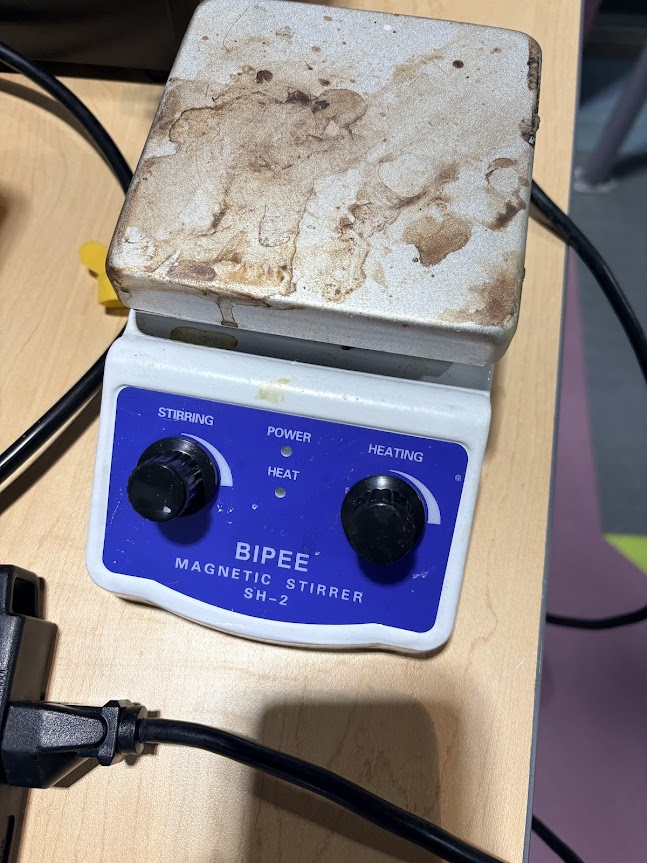
Figure 3: Picture of the magnetic stirrer.
After 5 min, the samples were heated to 70 ℃, because heat allows for the plasticizer to diffuse better in the polymer (Jinli Chemical). Once 70 degrees was reached, the heating was stopped and the beakers were stirred for another 15 min. After time expired, the beakers were removed from stirring and cooled in an ice bath to ambient temperature. Once the solutions reached room temperature, 0.029 g of xanthan gum powder was added to the experimental beaker and both beakers were immediately stirred for 45 min each. The beakers were removed from the magnetic stirrer, and 10 µL aliquots were removed from the bottom of the beaker at 0, 15, 30, and 45 min. These samples were transferred to a hemocytometer and microplastics were counted under a microscope using a 10X objective.
Microplastic quantification
A Neubauer improved hemocytometer with chamber dimensions of 3×3 1 mm2 squares, with a depth of 0.01 mm was used to count the number of microplastics one quadrant by using a microscope at 10x. Hemocytometers are specialized glass microscope slides used for counting cells (ThermoFisher). They hold specific volumes, allowing reproducible and accurate cell densities to be obtained. In this case instead of cells microplastic samples were counted on the specific grid lines. After 10 μL of solution was pipetted into the hemocytometer, particles in the hemocytometer’s top right grid were counted, and it was assumed that the count was uniform across the other three (Fig. 3). When xanthan gum was viewed in the hemocytometer, no spherical objects to be confused with microplastics were seen (Fig. 4).
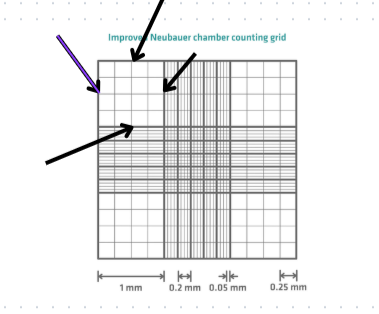
Figure 4: Diagram of a hemocytometer showing which lines where the areas where microplastics were not counted.
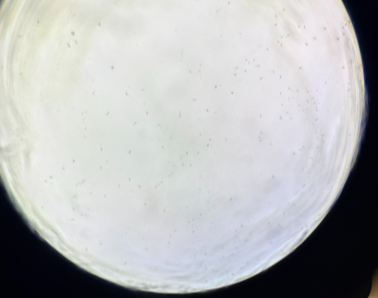
Figure 5: Light Microscopy Images of the XG solution (the matrix) at 10x objective.
Results and Discussion
Comparison of Polymer Types
Refer to supplemental for raw data
Formula:
Particles/L = (4 x particles counted in raw data of one quadrant)/ 0.4μL)x 1,000,000 μL/L
0.4 μL was used because the volume of one quadrant is 0.1 and 4 of them mean 0.4 μL. (ThermoFisher (0.1 mm3=0.1μL)).
Table 2: The particle count at different times for the control and experimental (sample).
| Polymer type | Sampling Time (min) | Particles/L in Experimental Sample (bottom) | Particles/L in Control (bottom) |
Polypropylene (PP) | 0 | 2.6 x 10⁸ | 3.0×10⁷ |
| 15 | 0 | 1.3×10⁸ | |
| 30 | 1.0×10⁷ | 9.0×10⁷ | |
| 45 | 3.0×10⁷ | 6.0×10⁷ |
Note. Table 2 Shows the effects of xanthan gum on the microplastic polypropylene. The changed values use the formula above (see supplemental table 1 for raw data).
% Difference= ((Particles at Time X in experimental/1 L)/ (Particles at time X in control/1 L)) x 100
Or
% Difference= ((Particles at Time X in experimental)/ (Particles at time X in control) x 100
At 0 min: 2.6×10⁸/3.0×107 X100 = 866.67%
At 15 min: 0/1.3×108 X100 = 0%
At 30 min: 1.0×10⁷/9.0×107 X100 = 11.11%
At 45 min: 3.0×10⁷/6.0×107 X100 = 50%
The trend observed was that at time 0, the experimental had a higher particle concentration on the bottom, yet as time went on from 0 to 45 minutes, the percentage difference went from 866.67% to 50%, demonstrating that XG in PP has an effect on the the amount of particles free-floating at the bottom of the experimental. The percentage decreasing could serve to show that over time the particles in the experimental relatively decreased and/or the particles in the control increased on the bottom. In this case, the control had an increased amount of particles while the experimental had a lower amount over time (showcasing XG’s reducing abilities through flocculation (further explanation in the next section)).
Table 3: Particle count at different times for the control and experimental (sample).
| Polymer type | Sampling Time (min) | Particles/L in Sample (bottom) | Particles/L in Control (bottom) |
Polyethylene Terephthalate (PET) | 0 | 1.5×10⁸ | 1.0×10⁷ |
| 15 | 1.0×10⁷ | 0 | |
| 30 | 0 | 0 | |
| 45 | 3.0×10⁷ | 0 |
Note. Table 3 Shows the effect of xanthan gum on polyethylene terephthalate (Trial 1 of PET). The changed values use the formula above (see supplemental table 2 for raw data).
% Difference= ((Particles at Time X in experimental/1 L)/ (Particles at time X in control/1 L)) x 100
At 0 min: 1.5×10⁸/1.0×107 X100 = 1500%
At 15 min: 1.0×10⁷/0 X100 = 0%
At 30 min: 0/0 X100 = 0%
At 45 min: 3.0×10⁷/0 X100 = 0%
Table 4: Particle count at different times for the control and experimental (sample).
| Polymer type | Sampling Time (min) | Particles/Lin Sample (bottom) | Particles/L in Sample (top) | Particles/L in Control (bottom) | Particles/L in Control (top) |
Polyethylene Tetrathylene | 0 | 2.0×10⁷ | 3.0×10⁷ | 1.0×10⁸ | 0 |
| 15 | 1.0×10⁷ | 1.0×10⁷ | 0 | 0 | |
| 30 | 4.0×10⁷ | 2.0×10⁷ | 0 | 0 | |
| 45 | 2.0×10⁷ | 1.0×10⁷ | 2.5×10⁸ | 0 |
Note. Table 4 Shows the effect of xanthan gum on polyethylene terephthalate; samples were taken from top and bottom (Trial 2 of PET). The changed values use the formula above (see supplemental table 3 for raw data).
% Difference= ((Particles at Time X in experimental/1 L)/ (Particles at time X in control/1 L)) x 100
Top:
At 0 min: 3.0×10⁷/0 X100 = 0%
At 15 min: 1.0×10⁷/0 X100 = 0%
At 30 min: 2.0×10⁷/0 X100 = 0%
At 45 min: 1.0×10⁷/0 X100 = 0%
Bottom:
At 0 min: 2.0×10⁷/1.0×108 X100 = 20%
At 15 min: 1.0×10⁷/0 X100 = 0%
At 30 min: 4.0×10⁷/0 X100 = 0%
At 45 min: 2.0×10⁷/2.5×108 X100 = 8%
A similar trend to the PP trial was observed in both PET trials, at time 0 there was a higher percentage difference on the bottom than at the end of the trial in general. This first PET trial showed the experimental having less particles at the 45 minute mark compared to the 0 minute mark (the control had a lesser amount over time, which could be attributed to mistakes in pipetting), while the second trial showed the particles in the control increasing over time with the experimental staying the same amount by the end. The fact that the particles at the end were the same amount after increasing a bit in the trial then decreasing could indicate floc formation occurring later in the trial. The percentage difference wasn’t applicable for the top perhaps due to quick sedimentation of the particles in the control, leaving no particles on top of the control (the microplastics may have been able to sink faster in water than xanthan gum, due to xanthan gum being a thick emulsifier with high viscosity (Pullen, C., 2025)).
Comparison of Sample Location
The trend overall for the controls on the bottom was that the particle amount was relatively stable throughout the trial, some trials having a gradual shift to more particles on the bottom as gravity pulled the particles down (fig. 6).
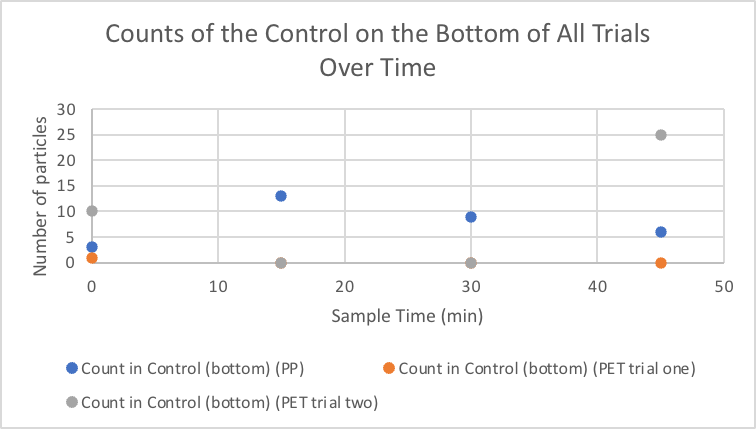
Figure 6: Plot of the data of the overall trend of all the controls at the bottom throughout the trials (raw data).
For PP, the trend for the XG sample one was that the number of free-floating particles lessened over time (Fig. 7). Since floc formation, which is smaller particles (microplastics) coming together to make a larger particle (a floc), as more flocs formed over time, the number of particles available for testing on the bottom had a general trend of decreasing over time (Malvern Panalytical, 2024). Flocs are typically 10 microlitres large at smallest, so given the fact that our hemocytometer grid could only hold 0.1 microlitres of liquid, all particles viewed under the microscope were presumed to be free-floating particles (Wu et. al, 2024).
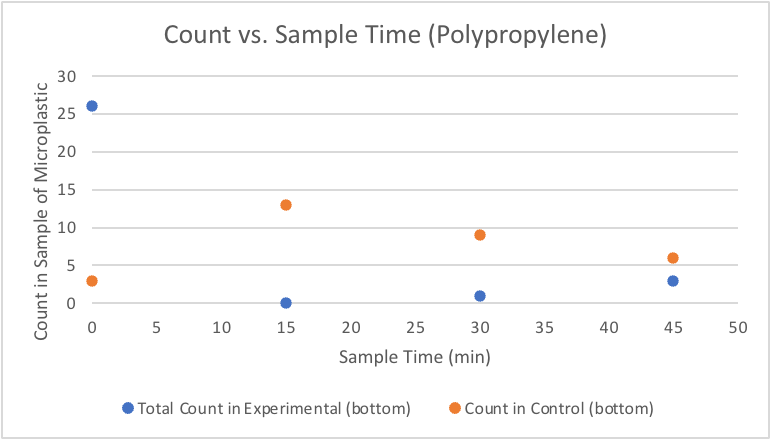
Figure 7: Plot of the data of the PP trial (raw data)
For the PET, the number of free-floating particles obtained over time lessened in one trial, indicating that flocs were forming due to less particles being available for observation. In the second trial the number went up then down again, perhaps indicating floc formation at a later time (fig. 8, 9, 10).

Figure 8: Amount of microplastics in the PET trials over time (raw data)
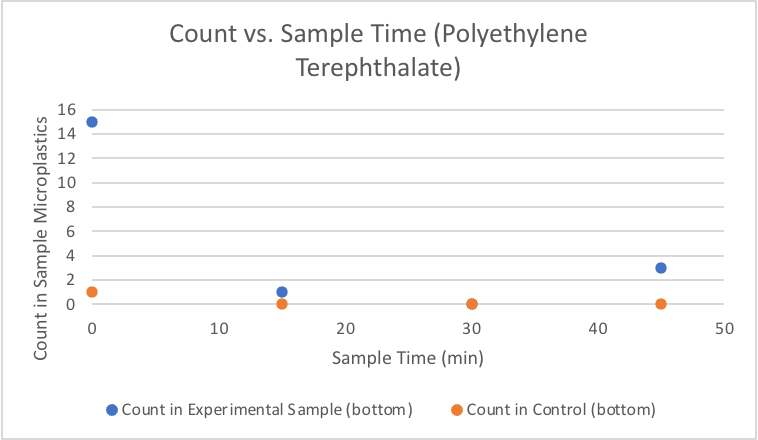
Figure 9: Plot of the first PET trial (raw data)
The control had no particles on top due to gravity pulling the particles down very quickly, since the control only had water while the experimental had XG as well which has high viscosity so the experimental particles took longer to sink/needed to flocculate to be able to sink faster. The overall trend on the top of the XG sample was that over time the number of microplastics on top lessened. This could indicate that as time passes, floc formation occurs and the microplastics sediment, due to gravity having a larger effect on the now larger particles (fig. 10)(Pullen, C., 2025).

Figure 10: Plot of the second PET trial (raw data)
Future Directions/Conclusion
As the amount of microplastics in the oceans per year rises to unprecedented levels and our current flocculants fail to be sustainable, this research is relevant in the forthcoming work world-wide to find natural alternatives. Our research shows promise in the ability to capture microplastics using natural flocculants. Further research may look into different pH levels with XG, due to the fact that the ocean has different pH’s at different places. Given more time and money, more trials can be done looking into different salinities, since the ocean has freshwater and salt water, or look into different temperatures such as what happens at a higher oceanic temperatures. All of these different factors can show that XG is a robust coagulant for microplastics across a multitude of scenarios, proving it to be useful in the fight against microplastics in aquatic environments.
Supplemental
Table 1: Microplastic count at different time stamps from the control and experimental (sample).
| Polymer type | Sampling Time (min) | Total Count in Experimental Sample (bottom) | Total Count in Control (bottom) |
Polypropylene (PP) | 0 | 26 | 3 |
| 15 | 0 | 13 | |
| 30 | 1 | 9 | |
| 45 | 3 | 6 |
Note. Table 1. Provides the overall trend of the effect of xanthan gum on the microplastic polypropylene.
Table 2: Microplastic count at different time stamps from the control and experimental.
| Polymer type | Sampling Time (min) | Count in Sample (bottom) | Count in Control (bottom) |
Polyethylene Terephthalate (PET) | 0 | 15 | 1 |
| 15 | 1 | 0 | |
| 30 | 0 | 0 | |
| 45 | 3 | 0 |
Note. Table 2 Provides the overall trend of the effect of xanthan gum on the microplastic polyethylene terephthalate.
Table 3: Microplastic count at different time stamps from the control and experimental.
| Polymer type | Sampling Time (min) | Count in Sample (bottom) | Count in Sample (top) | Count in Control (bottom) | Count in Control (top) |
Polyethylene Tetrathylene | 0 | 2 | 3 | 10 | 0 |
| 15 | 1 | 1 | 0 | 0 | |
| 30 | 4 | 2 | 0 | 0 | |
| 45 | 2 | 1 | 25 | 0 |
Note. Table 3 Provides the overall trend of the effect of xanthan gum on the microplastic polyethylene terephthalate with samples from top and bottom.
References
Costigan, E., Collins, A., Hatinoglu, M. D., Bhagat, K., MacRae, J., Perreault, F., & Apul, O. (2022, May). Adsorption of organic pollutants by microplastics: Overview of a dissonant literature. https://doi.org/10.1016/j.hazadv.2022.100091
Eco-Friendly Water Treatment. (2024, March 4). 14. understanding the different types of flocculants and their applications in water treatment. Floc Systems Inc. . https://flocsystems.com/understanding-different-types-flocculants/
Kulkarni, V. S., & Shaw, C. (2016). Chapter 5 – Use of Polymers and Thickeners in Semisolid and Liquid Formulations, Essential Chemistry for Formulators of Semisolid and Liquid Dosages, Academic Press. https://doi.org/10.1016/B978-0-12-801024-2.00005-4
Libretexts. (2023, August 24). 32.2: Theory 1. Engineering LibreTexts. https://eng.libretexts.org/Bookshelves/Materials_Science/TLP_Library_I/32%3A_The_Glass_Transition_in_Polymers/32.2%3A_Theory_1
Manually counting cells in a hemocytomer. Thermo Fisher Scientific – US. (n.d.). https://www.thermofisher.com/ca/en/home/references/gibco-cell-culture-basics/cell-culture-protocols/counting-cells-in-a-hemacytometer.html
Oropeza-Guzmán, M. T., & Araiza-Verduzco, F. (2023). Polysaccharide evaluation in flocculation mediated via Polyelectrolyte Complex. Revista de ciencias tecnológicas. https://doi.org/10.37636/recit.v6n2e247
Pharmaceutical Research and Production Company. (n.d.). Benzyl benzoate and plastic are incompatible. retinoids.ru. https://en.retinoids.ru/pub/about-preparations/benzilbenzoat-i-plastik-nesovmestimi#:~:text=Its%20chemical%20structure%20is%20an,the%20drug%20for%20therapeutic%20purposes.
Pullen, C. (2025, March 17). Xanthan gum – is this food additive healthy or harmful?. Healthline. https://www.healthline.com/nutrition/xanthan-gum#TOC_TITLE_HDR_7
Safety Data Sheet. (2005, May 5). https://www.fishersci.com/store/msds?partNumber=AA1235722&productDescription=IRON(III)+CLRIDE+ANHY+98%25+100G&vendorId=VN00024248&countryCode=US&language=en
Safety data sheet: Aluminium sulfate. (2022, December 21). https://www.chemos.de/import/data/msds/GB_en/10043-01-3-A0008468-GB-en.pdf
Satle, A., & Agrawal, S. (2012, June 5). Solubility Enhancement Potential of Tamarind Seed Polysaccharide as Pharmaceutical Excipient. https://www.academia.edu/124218370/Solubility_Enhancement_Potential_of_Tamarind_Seed_Polysaccharide_as_a_Solubilizer
Sayam, S., Islam, T., Tusti, T. H., & Ghosh, J. (2025, October 28). Microplastic removal from wastewater through biopolymer and nanocellulose-based Green Technologies. RSC Sustainability. https://doi.org/10.1039/D5SU00634A
Srinivasan, R., Bhuju, R., Chraibi, V., Stefan, M. C., Hien, N., Ustundag, D., Gill, J. L. N., Rasmussen, N., Saurenmann, B., Bracerra, J., Fowler, M., White, H., & Azadah, M. (2025, April 10). Fenugreek and Okra Polymers as Treatment Agents for the Removal of Microplastics from Water Sources. doi: 10.1021/acsomega.4c07476
Sudirgo, M. M., Surya, R. A., Kristianto, H., Prasetyo, S., & Sugih, A. K. (2023, April). Application of xanthan gum as coagulant-aid for decolorization of synthetic Congo red wastewater. Heliyon. https://www.cell.com/heliyon/pdf/S2405-8440(23)09478-1.pdf
Vardhan J, Yadav S, Naik Bukke SP, et al. A Review of Methods of Enhancing Polysaccharides for Drug Delivery Applications. Natural Product Communications. 2025;20(12). doi:10.1177/1934578X251407010
UN declares war on Ocean Plastic. (2017, February 23). https://www.unep.org/news-and-stories/press-release/un-declares-war-ocean-plastic-0
What is flocculation in water treatment?. Malvern Panalytical. (2024, September 2). https://www.malvernpanalytical.com/en/learn/knowledge-center/insights/what-is-flocculation-in-water-treatment
What is the effect of temperature on Plasticizer Performance?_Industry News_News_Jinli Chemical. (n.d.). https://en.jinlichemical.com/news/industry-news/what-is-the-effect-of-temperature-on-plasticizer-performance-81.html
Wu, N., Grieve, S. W. D., Manning, A. J., & Spencer, K. L. (2024). Flocs as vectors for microplastics in the aquatic environment. Nature Water, 2(11), 1082–1090. https://doi.org/10.1038/s44221-024-00332-4
Yang, Y., Zhuo, Y., Cao, Z., Yu, F., Xu, X., Zhang, H., & Wang, Y. (2024, December). Synergistic flocculation performance and underlying mechanisms of a novel bioflocculant flocan with coagulant iron salt. ScienceDirect. https://doi.org/10.1016/j.jece.2024.114480