Bill Liu – Applied Science
Abstract
The world’s population is expected to reach 9.7 billion by 2050. It would require a roughly 60% increase in food production to sustain such a population, and seems out of reach with the current global agricultural system. Soil-free cultivation methods like hydroponics have emerged as viable methods of cultivation that can be implemented on a larger scale, and have risen to become increasingly popular in the last decade. Hydroponics is designed to grow plants in nutrient solutions without using soil, and it offers year-round, vertically scalable plant growth using less water and minimal pesticides. In this experiment, a low cost and closed-loop hydroponic system was constructed using buckets, rubber tubing, and a small submersible pump—all in a confined space. In the one trial conducted, five out of twelve seeds germinated, but seven plants either grew mold or withered by day ten possibly due to excessive moisture and uneven nutrient distribution. Compared to unfertilized soil experiments from outside literature (mean 16.29 cm in 31.33 days), the system showed accelerated early growth, but did not match growth performance under optimized nitrogen treatments. These results demonstrate that even budget hydroponic systems can support plant growth in urban settings, but it has not shown to be a more optimal growth method for plant height when compared to fertilized soils. Future work will focus on regulating pH, implementing adjustable LED lighting, and testing alternative growth mediums to further improve yield and system reliability.
Introduction
As the world population continues to grow, the need for new and improved agricultural techniques increases as well. These developments are crucial to the stability of the projected global population of 9.7 billion by 2050, as shown in the Food and Agriculture Organization’s 2001 report. There needs to be a roughly 60% increase in global food production to accommodate this increase, and this number could be even larger if we hope to reduce the percentage of the global population affected by malnourishment—which is currently at 11% (Rajaseger et al., 2023). Such tasks, while seemingly herculean, can be eased by the development of hydroponic technology in agriculture.
Hydroponics is generally regarded as the use of nutrient solutions, either in liquid or gaseous form, to grow plants (Rajaseger et al., 2023). It removes the need for a soil-based substrate. These advancements have led to hydroponic systems designed for a wide variety of crops which can be deployed across numerous climates and regions, allowing for year-round growth while using less water, nutrients, and pesticides; it also comes with the added benefit of improved taste and nutritive values in crops from hydroponic cultivation compared to soil-based cultivation (Chatterjee et al., 2025). It also helps to improve crop output as such systems can be expanded vertically. Hydroponics can generally be divided into two areas: solution culture and soilless medium culture, with the latter being viewed by some as veering from ‘true’ hydroponics (Niu & Masabni, 2022).
The combination of smart technology and hydroponics is one that holds great promise for both environmentally friendly and effective crop production, where sensors help to monitor soil conditions, nutrient levels, and plant vitality over long stretches of time previously not easily done by humans (Rajaseger et al., 2023). This is generally connected using the Internet of Things (IoT), which refers to the cloud-connected network of devices and technologies generally possessing sensing, computational, or other abilities (Rajendran et al., 2024).
Hydroponics has also been studied in the context of global potato production, as it is a key food staple for many—especially for those in underdeveloped countries (Rajaseger et al., 2023). Techniques such as mini tuber production, where disease-free plantlets are grown in controlled environments to rapidly produce tubers, have previously been used to obtain in vitro material, but hydroponics has proved to have faster rates and lower concerns of contamination from soil pathogens (Rajendran et al., 2024). This has helped it to garner attention as it has improved the production of virus-free seed potatoes. Research indicates that it will often provide a better Return on Investment than conventional farming methods; hydroponic lettuce production is a good example of this, where it can potentially create yield per acre up to 20 times higher than soil-based production (Rajaseger et al., 2023).
The United Nations 2018 Revision of World Urbanization Prospects projects that 68% of the world population will live in urban areas by 2050 (United Nations, 2018b). This provides an opportunity for hydroponics in confined urban spaces, allowing individual gardeners to benefit from its reduced water usage and average increased yield compared to growth in plain soil (Chatterjee et al., 2025). The experiment aims to construct a low-cost hydroponics system in a confined space and evaluate the growth rate of spinach (Spinacia oleracea l.) plants relative to existing data in traditional mediums. Hydroponic systems can often cost at least several hundred dollars for a medium sized system, which is likely the largest size that could be used in a confined urban environment (Shin et al., 2024). The proposed system will cost around 120 CAD without the use of sensors to save on cost but potentially limiting the yield of the design compared to automated systems. It will hope to determine whether the extra effort and cost to construct such a system is worth the return for individual growers by analysing average plant height over 30 days.
Materials and Methods
The experimental setup featured two main aspects: the closed-loop hydroponic system and preparation of the plant pods. The plants were prepared by placing 12 1-inch rockwool grow plugs in four plastic containers with three grow plugs in each container. The containers were placed into holes drilled into the lid of a 2-gallon bucket with space between each unit. Twelve spinach seeds were then procured, and one seed was placed within each of the rockwool grow plugs.
The design by Kamps (2022) was modified for the purposes of this experiment. The closed-loop hydroponic system was constructed using one 2-gallon bucket for plant growth and one 5-gallon bucket serving as a reservoir. Holes were drilled into opposite sides of the 2-gallon bucket. On one side, a hole was made 7 cm below the bucket’s lip, and the second hole on the opposing side was drilled 3 cm lower than the first. The increased pressure on the bottom hole speeds up water flow, helping the non pump-powered water flow to keep up with the electric pump. Additionally, plastic clips were used to restrict the water flow from the main pump-powered source in order to maintain a balanced flow rate throughout the system. This is shown in Figure 1.
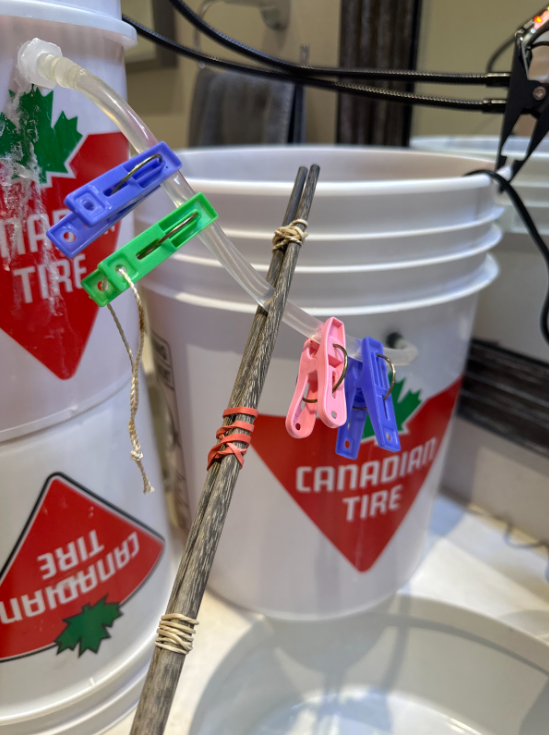
Figure 1: Water Flow Constricting Contraption
Appropriately sized plastic barbs were inserted into the drilled holes which were then made watertight by using caulk to fill the small gaps between the plastic barb and the sides of the hole. Rubber tubing was then attached to the outward sides of the plastic barbs to form a watertight, closed-loop system (Figure 2).
A 5-gallon bucket was similarly modified with holes, but the first hole drilled higher up on the bucket instead had a small submersible water pump fitted into the hole and sealed using caulk. The pump’s output was directed into the higher hole on the 2-gallon bucket through rubber tubing which is shown in Figure 2.
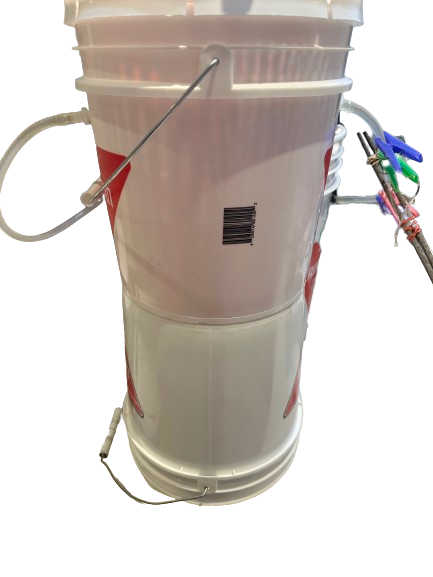
Figure 2: Tubing From Water Pump Into Growth Bucket
This tubing configuration allowed water to be pumped from the reservoir bucket into the 2-gallon bucket, after which gravity—aided by the 5 cm vertical offset—pulled the water back into the reservoir bucket (Figure 3).

Figure 3: Hydroponic Setup Without Plants
The lid of the 2-gallon bucket was fitted with four evenly spaced 1.5-inch radius holes (Figure 4). Small plastic grow baskets of the same radii were placed into the holes such that they hung from the lids. Prior to being placed into the holes, the plastic grow baskets were each loaded with three rockwool grow plugs which all contained one spinach seed. The 2-gallon bucket was filled with 1.75 gallons of water, and the 5-gallon bucket was filled with 4.8 gallons of water.

Figure 4: Overhead View of Spinach (Spinacia oleracea l.) Growth Baskets
A two-part hydroponic nutrient solution (Root Farm) was added to the reservoir and 2-gallon buckets, and the pump was powered via a standard wall outlet. The nutrient solution was kept in two parts to prevent minerals from forming sediment. The lids were then placed onto 2-gallon buckets with the plastic grow baskets inserted into the lids, and the bottoms of the baskets were submerged by design to allow the rockwool grow plugs to take in water. A standard plant growth light (Wolezek) was placed directly above the plants to provide simulated light and heat for growth.
System performance was monitored daily, including checks for leaks, inspection of the seedlings for any visible issues, and recording measurements of plant heights at set times.
Results
The hydroponic system did not have any major errors such as large leaks or water flow issues, as most were ironed out before the system was activated. Within the first week, around 60% of the spinach seeds had germinated and began to sprout. However, after 10 days some of the seeds had withered and died. There was a white residue that left a white sheen on the surface of the water and was likely from the caulk used. The weekly recorded raw height data of the plants is noted in Table 1.
Table 1: Raw Height Data of Spinach (Spinacia oleracea l.) Plants

Three seeds are missing from the data collection due to growing mould without sprouting on approximately the 4th day after planting. Additionally, plants 2 and 7 dried out around 11 days in, and plants 5 and 9 never sprouted. The average plant height over a four week span of the remaining 5 plants which sprouted and grew is shown in Figure 5.
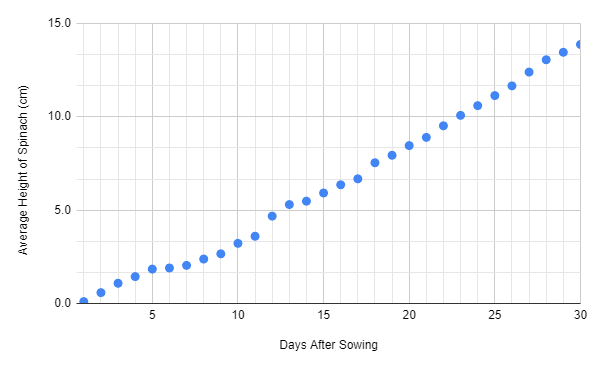
Figure 5: Average Height of Growth of Five Spinach (Spinacia oleracea l.) Plants Over a Four Week Span
The remaining five plants grew throughout the four weeks of observations, though at different rates, ending with a final mean plant height of 13.9 cm.
Discussion
The results suggest that a small-scale closed-loop hydroponic system can successfully grow spinach in urban environments, even when built on a tight budget and low amounts of space. The system did not leak while it was functioning, but it must be ensured that the caulk— or other substance— being used to seal the gaps between the rubber tubing and drilled hole in the buckets fully sets before adding water during setup. This precaution comes from residue leaking into the water in this experiment which introduced foreign chemicals that may have affected the health of the plants. The successful germination and initial growth of the spinach plants shows that the system was functioning, and that the use of a small submersible water pump was enough to keep the water in the system circulating and maintain required oxygen levels within the water. While five plants germinated, only one grew roots that were able to penetrate the rockwool grow plug and rest inside the nutrient-filled water. This allowed it to intake nutrients at a much higher rate and led to faster growth as shown in Figure 6 where that plant reached a height of 20 cm on day 23, while none of the other plants in the system had reached that height by day 30. The system was initially designed for all roots of the plants to be able to come in contact with the water itself. This could be solved by either planting in a less dense medium or implementing the system with growth pods stacked upwards with water dripping onto the roots, but such a setup would require more resources and funding for the larger frame.
In another field experiment, the height of spinach in traditional soil had a mean of 16.29 cm after an average of 31.33 days with no fertilizer, but by using a nitrogen treatment of 75 kilograms per hectare that number increases to a mean of 30.76 cm in only 24.67 days (Jakhro et al., 2017). By comparing the height growth of the plant which grew as intended in this experiment against such numbers, we can see that there is an advantage compared to using only soil to grow spinach plants, but it falls behind when compared against nitrogen treatments. To achieve more comprehensive results, the number and size of leaves should be recorded in future experiments, but most importantly such experiments require a larger sample size than one plant to enable a more accurate comparison to preexisting data.
It was observed in this experiment that some plants seemed to die after around 10 days of sustained growth. This could be due to a variety of issues ranging from an imbalance of nutrients provided, irregular pH levels of the water being counterproductive to plant growth, or the lack of a direct light and thermal energy source for the plants. A possible solution would be using controlled lighting by implementing standard hydroponic plant growth lights. Blue and red LEDs have been found to be effective in serving as artificial light for many plants, but a study conducted on spinach found that adjusting light intensity and lighting time were the main components to manipulate to improve either spinach yield or quality (Zou et al., 2020). Expensive LEDs that have the capabilities to adjust specific parameters of lighting were not in the budget of this experiment, limiting the effectiveness of the research.
The pH level in the water was measured to be around 8.5 using pH test strips (Root Farm), which may indicate that some contaminant had been introduced to the water—potentially being caulk seeping in. A higher pH than desired can affect nutrient availability for root uptake, disturbing the nutrient balance throughout the system (Ferrarezi et al., 2022). In contrast, the ideal pH for growing spinach in hydroponic cultivation is typically between 5.5 and 6.5 (Kumar et al., 2024). This should be controlled thorough water testing and dilution using distilled water. Another potential confounding variable was that the closed-system water circulation was achieved through trial and error until water levels stayed consistent over numerous hours. No instruments were used to measure flow rate concretely, and may lead to inconsistencies if attempting to replicate such a setup. The experiment should be repeated with more trials in the future to reduce the impact of individual errors and obtain a more indicative average of spinach height growth. Additionally, a control group—that was not included in this experiment—should also be grown alongside the additional trials to obtain a baseline height for comparison. A suitable control would be a growing spinach plants in a small indoors plant bed. Additionally, the use of rockwool grow plugs, while common in hydroponics, may not have ensured cleanliness within the system due to their relatively unknown manufacturer. Certain seeds could be planted in other mediums such as Coco Coir to test if any difference between growth mediums exist.
Conclusion
The experiment suggests that low-cost hydroponics is a viable method for growing spinach (Spinacia oleracea l.) plants in a confined space. When compared to plants grown in traditional methods with the addition of fertilizer, the results suggest that a hydroponics system may not necessarily produce better production on a small scale. Overall, future studies should aim to adjust and regulate variables such as pH and nutrient levels to ensure more effective plant growth in low-cost home hydroponics systems. An optimized form of hydroponics suitable for urban use, which benefits from compact vertical growth achievable using hydroponics, could aid in increasing global food production in a sustainable manner. While more research needs to be done on the viability of hydroponics and its related areas in smaller-scale urban areas, there is much reason for optimism about its ability to help humanity produce a fruitful, resource-filled future.
References
Chatterjee, A., Ghosh, P., Winkler, B., V, V., Debnath, S., Cichocki, J., Trenkner, M., Vanicela, B., Riethmueller, C., Walz, M., Chandra, S., & Pal, H. (2025). Demystifying the integration of hydroponics cultivation system reinforcing bioeconomy and sustainable agricultural growth. Scientia Horticulturae, 341. https://doi.org/10.1016/j.scienta.2025.113973
Ferrarezi, R. S., Lin, X., Gonzalez Neira, A. C., Tabay Zambon, F., Hu, H., Wang, X., Huang, J. H., & Fan, G. (2022). Substrate pH Influences the Nutrient Absorption and Rhizosphere Microbiome of Huanglongbing-Affected Grapefruit Plants. Frontiers in Plant Science, 13, 856937. https://doi.org/10.3389/fpls.2022.856937
Jakhro, M. I., Ishtiaq Shah, S., Amanullah, Yaqub Zehri, M., Ali Rahujo, Z., Ahmed, S., Ahmed, S., & Aftab Jakhro, M. (2017). Growth and yield of spinach (Spinacia oleracea l.) under fluctuating levels of organic and inorganic fertilizers. International Journal of Development Research, 7(2), 11454–11460. https://doi.org/10.37118/ijdr
Kamps, H. J. (2022, August 18). DIY Hydroponics on the cheap. Medium. https://haje.medium.com/diy-hydroponics-on-the-cheap-43e2e0fd258b
Kumar, R., Singh, J., Kumar, R., Kumar, S., & Pandey, A. K. (2024). Optimizing growth and nutrient uptake of spinach (Spinacia oleracea l.) in hydroponic systems through varied fertilizer concentrations. International Journal of Advanced Biochemistry Research, 8(8). https://doi.org/10.33545/26174693.2024.v8.i8Sj.1911
Nguyen, N. T., McInturf, S. A., & Mendoza-Cózatl, D. G. (2016). Hydroponics: A Versatile System to Study Nutrient Allocation and Plant Responses to Nutrient Availability and Exposure to Toxic Elements. Journal of Visualized Experiments, 113. https://doi.org/10.3791/54317
Niu, G., & Masabni, J. (2022). Chapter 9 – Hydroponics. In T. Kozai, G. Niu, & J. Masabni, (Eds.),Plant Factory Basics, Applications and Advances (pp.153-166). Academic Press. https://doi.org/10.1016/B978-0-323-85152-7.00023-9
Rajaseger, G., Chan, K. L., Yee Tan, K., Ramasamy, S., Khin, M. C., Amaladoss, A., & Kadamb Haribhai, P. (2023). Hydroponics: current trends in sustainable crop production. Bioinformation, 19(9), 925–938. https://doi.org/10.6026/97320630019925
Rajendran, S., Domalachenpa, T., Arora, H., Li, P., Sharma, A., & Rajauria, G. (2024). Hydroponics: Exploring innovative sustainable technologies and applications across crop production, with Emphasis on potato mini-tuber cultivation. Heliyon, 10(5), e26823. https://doi.org/10.1016/j.heliyon.2024.e26823
Shin, K. K. Y., Ping, T. P., Ling, M. G. B., Jiun, C. C., & Bolhassan, N. A. B. (2024). SMART GROW – Low-cost automated hydroponic system for urban farming. HardwareX, 17(2468-0672), e00498. https://doi.org/10.1016/j.ohx.2023.e00498
United Nations. (2018b, May 16). 2018 Revision of World Urbanization Prospects. United Nations. https://www.un.org/en/desa/2018-revision-world-urbanization-prospects
Zou, T., Huang, C., Wu, P., Ge, L., & Xu, Y. (2020). Optimization of Artificial Light for Spinach (Spinacia oleracea l.) Growth in Plant Factory Based on Orthogonal Test. Plants (Basel, Switzerland), 9(4), 490. https://doi.org/10.3390/plants9040490