Aaliyah Cabiles – Life Science
Abstract
Water is essential to survival; however, many issues exist with current water sanitation methods, resulting in preventable mortalities. The purpose of this experiment was to examine three popular water purification methods: iodine, chlorine and UV light. Water samples were obtained and utilized to serve as a model to examine how different water purification methods may yield different results. In this experiment, chlorine was the most effective in eliminating bacteria, followed by iodine and UV light. By examining the strength of diverse water purification methods, this experiment serves as a catalyst to find solutions that effectively eliminate the high probability of contracting waterborne illnesses.
Introduction
As the modern world has progressed, two crucial issues have arisen relating to water purification: water scarcity and contamination that results in severe waterborne illnesses. Water scarcity has significantly worsened in the current world, with one quarter of the global population unable to access clean drinking water (Bayram, 2023). This problem is aggravated as developing countries, which have vulnerable populations, are reaching mortality rates of over 1.8 million people annually (Shayo et al, 2023).
Although crucial water scarcity issues disproportionately affect developing countries, both developing and developed countries are confronted with the issue of microbial intestinal infections due to cross-contamination. Contamination can result from wastewater from agricultural areas, sewage overflow and leakage of sewer systems, in which all play a crucial role in contaminating water supplies with pathogens (Girones, 2010). This problem is aggravated as waterborne illnesses continue to cause over 3.5 million deaths annually in both developed and developing countries (Dubay, 2021). Even within specific regions of developed countries, such as Western Canada, residents lost access to safe drinking water due to the lack of substantial water treatment in their community (Szeto, 2022).
Sanitation methods in developed countries currently utilize a five-step process to treat water supplies: coagulation, flocculation, sedimentation, filtration and disinfection (CDC, 2022). There are many ways this treatment process could lead to contamination, making consumers vulnerable to illness. Although governments put in a great effort in preventing waterborne diseases, issues with the system can result in unprecedented health issues. With global problems such as climate change, heavy rain can prevent water purification systems from functioning, resulting in contaminated water being transferred to home taps (Takaro et al, 2022). Previous attempts have been conducted to approach this problem through scientific methods such as reverse osmosis, ultrafiltration, microfiltration and biological treatment, yet water problems continue to be prevalent in many different countries (Foster, 2017).
The problems of water scarcity and contaminated water are crucial issues; hence, this experiment aims to provide a reasonable answer to the question, “what is the effect of three popular water sanitation methods on eliminating pathogens from water?”. By determining which water purification method (UV light, chlorine and iodine, which are the most widespread water treatments globally) is the most effective in inhibiting the spread of preventable illnesses, society can collectively minimize mortality rates and utilize a safe and inexpensive water purification method, hence maintaining safe civilian water consumption, especially with vulnerable populations in developing countries.
Materials and Methods
Method Overview
Each of the three weeks that the experiment was conducted, one water sample (respectively) was obtained from York House School and stored in a clean, dry container. Three distinct water purification methods were used: chlorine (Clorox), iodine (Merlan) and UV light (Suyooulin). The strength of each water purification method was examined through one treatment group per week: two replicates which contained water that was purified through its specific purification method, and one replicate that served as a control (except for the final treatment group with UV light).
Iodine
Potassium iodide (KI) was used for the two trials involving iodine. Five drops of iodine were recommended for one liter of water (Godyer and Behrens, 2006). Thus, one drop of iodine was added to the 200mL of water in the beaker. Afterwards, the solution was set aside for 30 minutes to directly examine the immediate effect of iodine.
Chlorine
Household bleach (NaClO) was used for the two trials involving chlorine. A significantly small amount of chlorine (five drops/liter) was recommended to effectively kill bacteria. Hence, half a drop of chlorine (0.025mL) was added to the 200mL of water in the beaker. Afterwards, the solution was set aside for 30 minutes to examine the immediate effect of chlorine.
UV Light
An ultraviolet (UV) lamp was used for the two trials involving UV light. After pouring 200mL of the water into a beaker, the water was exposed to UV light for two and a half minutes under a box as a safety precaution. It was immediately tested as it did not need to sit with the solution after.
General Procedure
Before conducting each trial, three Petri dishes were made and labeled (for a total of 9 Petri dishes during the entire period of the experiment). 200mL of water was transferred from the container to a beaker. Three drops from both the control beaker and purified water beaker were added to a Petri dish, spread using an L-spreader, and the three Petri dishes were incubated at a temperature of 37℃ for seven days. After one week of growth, the colonies in the dish were measured through colony forming units (CFUs). Each Petri dish was split into four quadrants. The quadrant with the most bacteria was identified and CFUs in this quadrant were counted. The resulting number was then multiplied by four to extrapolate the potential of future bacterial growth. This was measured and recorded for each dish. As there was no control plate for the UV treatment group, the mean of the CFU counts for the iodine and chlorine controls were used for comparison between control and treatment groups.
Results
The plated water samples resulted in some form of bacterial growth (Figure 1). The number of CFUs observed in each Petri dish is recorded in Table 1.
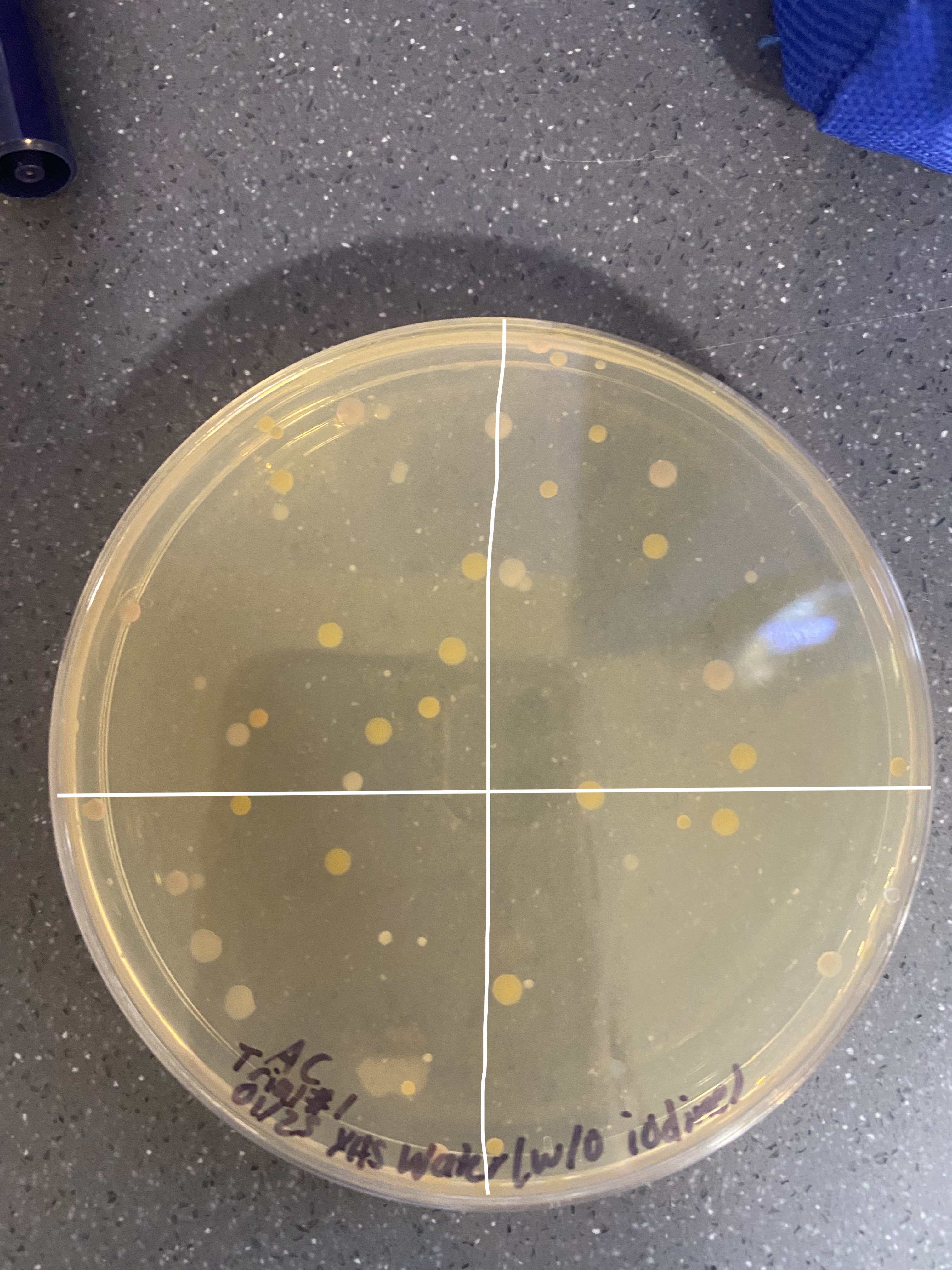
Figure 1. Petri dish that acted as a control for the two trials with iodine during Week 1 of the experiment.
Table 1. Compilation of data of colony forming units (CFUs) for each trial, where replicates 1 and 2 of the control group correspond to the iodine and chlorine controls respectively.

Based on the mean CFUs found in the control plates (n=2), iodine and chlorine were found to be equally effective (Figure 2, Figure 3). Though less effective than its counterparts, UV light was able to eliminate 18 CFUs compared to the control group. Although iodine and chlorine were equally effective in terms of CFU count, it was observed that the CFUs in the iodine-treated Petri dish were significantly larger than those in the chlorine-treated Petri dish. Hence, the effectiveness of the water purification methods from highest to lowest, was chlorine, iodine, and UV light.

Figure 2. Mean Colony Forming Units (CFUs) of Each Treatment Group depicted in a bar graph.

Figure 3. Final results of controls, iodine, chlorine and UV light during Week 3 of the experiment (from top to bottom).
Discussion
Results Interpretation
It can be concluded, through quantitative (CFU count) and qualitative (CFU size) analysis based on mean control CFU, that chlorine was the most effective in eliminating the bacteria from the water sample (Figure 2 and 3, Table 1). In past studies, it was proven that households with intervention (water purification using chlorine) had a significant impact on preventing diarrheal disease in Bolivia; hence, these results are consistent with what was seen in precedent studies and illustrates the importance of purification methods in ensuring safe access to drinking water (Sobsey, 2003).
This conclusion was made based on the comparison of treatment groups to a mean pre-treatment CFU value. A mean of 50 CFU was obtained by averaging counts from the iodine and chlorine control plates (n = 2). However, it should be noted that there was some variation between these controls. The control Petri dish for chlorine contained 32 CFU, and after purification, the observed CFU decreased, with an average of 2 CFU left through the two trials, displaying a 93.75% from the control. The untreated control in the iodine trial contained 68 CFU, and an average of 2 CFU remaining in the iodine-treated Petri dishes, displaying a 97% decline from the control (where larger CFUs were observed compared to the Petri dishes treated with chlorine). The use of mean CFU may therefore not be the most accurate approach for this comparison.
Source of Random Errors
This experiment illustrates how chlorine may be the most effective of the tested treatment methods in eliminating pathogens. Due to a lack of control group for the UV trial, an average CFU value for control plates was used for comparisons. As the water for each treatment group was collected at different time points, it would have been preferable to compare each treatment group to a unique control plate. This would account for confounding variables, such as variation in bacterial content in the test water over time. It would be a good idea to repeat this experiment with a control plate for each individual treatment. Furthermore, the results may not be consistent with water from other water sources.
Furthermore, there could have been external factors that affected the ability for the purification methods to yield dependable results. For example, the plastic pipette and L-spreader may have had some form of contamination, transferring onto the Petri dish. It may be a good idea to ensure that tools are sterilized thoroughly before using it during the experiment to prevent this type of random error. Moreover, in the trial with the UV light, the beaker may have been exposed to some form of light outside of the box, minimizing the strength of the lamp. It is also important to note that there were issues with the two controls, as there were different species present in the Petri dishes. Lastly, the water samples used in this experiment may have already been treated through local water purification methods.
Hence, the water would have been treated twice, which minimizes the perceived usefulness of the results as the control may have been treated with the water sanitation methods in the experiment, and yet still contained a significant number of bacteria (that may or may not be pathogenic).
Future Projects
In terms of new development, it would be an excellent project to gain insight on how different amounts of each water purification method would affect its capability to specifically purify water obtained from schools. This would showcase the minimum and maximum amount that is needed to eliminate a more significant portion of bacteria from the water samples. Moreover, having the resources to discover which bacteria grew in the Petri dish would allow for the insightful understanding of the strengths and weaknesses of each water purification method in eliminating different types of bacteria. Though UV light eliminated a significantly lower number of pathogens than iodine and chlorine, the pathogens growing on the Petri dish may have been non-harmful bacteria.
This future experiment may also spark initiative for the government to take action by ensuring that current water purification methods are working effectively (e.g. confirming that the pathogens left on the Petri dish by each purification method, especially UV light, are not disease-causing) holding them accountable in ensuring the inhibition of preventable waterborne illnesses. By testing inexpensive and effective water treatment methods to be potentially used extensively, this experiment serves as a foundation to benefit vulnerable communities, who currently face urgent problems with accessibility to clean water.
References
Bayram , S. (2023, March 22). Billions of people lack access to clean drinking water, U.N. report finds. NPR. https://www.npr.org/2023/03/22/1165464857/billions-of-people-lack-access-to-clean-drinking-water-u-n-report-finds#:~:text=Around%202%20billion%20people%20around.
CDC. (2022, May 18). Water Treatment | Public Water Systems | Drinking Water | Healthy Water | CDC. CDC. http://www.cdc.gov/healthywater/drinking/public/water_treatment.html
Dubay, A. (2021, July 6). Waterborne disease facts and how to help. World Vision. https://www.worldvision.ca/stories/clean-water/cholera-waterborne-disease-facts
Foster, J. E. (2017). Plasma-based water purification: Challenges and prospects for the future. Physics of Plasmas, 24(5), 055501. https://doi.org/10.1063/1.4977921
Gibson, K. E. (2014). Viral pathogens in water: occurrence, public health impact, and available control strategies. Current Opinion in Virology, 4, 50–57. https://doi.org/10.1016/j.coviro.2013.12.005
Girones, R., Ferrús, M. A., Alonso, J. L., Rodriguez-Manzano, J., Calgua, B., de Abreu Corrêa, A., Hundesa, A., Carratala, A., & Bofill-Mas, S. (2010). Molecular detection of pathogens in water – The pros and cons of molecular techniques. Water Research, 44(15), 4325–4339. https://doi.org/10.1016/j.watres.2010.06.030
Goodyer, L., & Behrens, R. H. (2006). Safety of Iodine Based Water Sterilization for Travelers. Journal of Travel Medicine, 7(1), 38–38. https://doi.org/10.2310/7060.2000.00012
Shayo, G. M., Elimbinzi, E., Shao, G. N., & Fabian, C. (2023). Severity of waterborne diseases in developing countries and the effectiveness of ceramic filters for improving water quality. Bulletin of the National Research Centre, 47(1), 113. https://doi.org/10.1186/s42269-023-01088-9
Snook, A. (2022, November 7). Northern Waters: Water treatment challenges across Canada’s territories – Water Canada. Water Canada. https://www.watercanada.net/feature/water-treatment-challenges-norther-canada/
Sobsey, M. D., Handzel, T., & Venczel, L. (2003). Chlorination and safe storage of household drinking water in developing countries to reduce waterborne disease. Water Science and Technology: A Journal of the International Association on Water Pollution Research, 47(3), 221–228. https://pubmed.ncbi.nlm.nih.gov/12639033/
Szeto, W. (2022, August 12). Northeastern B.C. district issues “do not consume” order after water treatment plant failure. CBC. https://www.cbc.ca/news/canada/british-columbia/hudsons-hope-water-advisory-bacteria-1.6548816
Takaro, T. et al. (2022). Chapter 7 — Health of Canadians in a Changing Climate. Health in a Changing Climate 2022. https://changingclimate.ca/health-in-a-changing-climate/chapter/7-0/